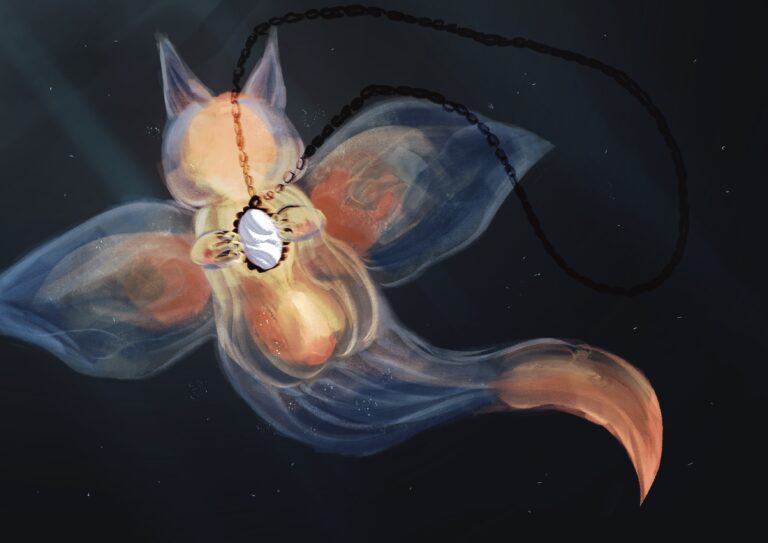
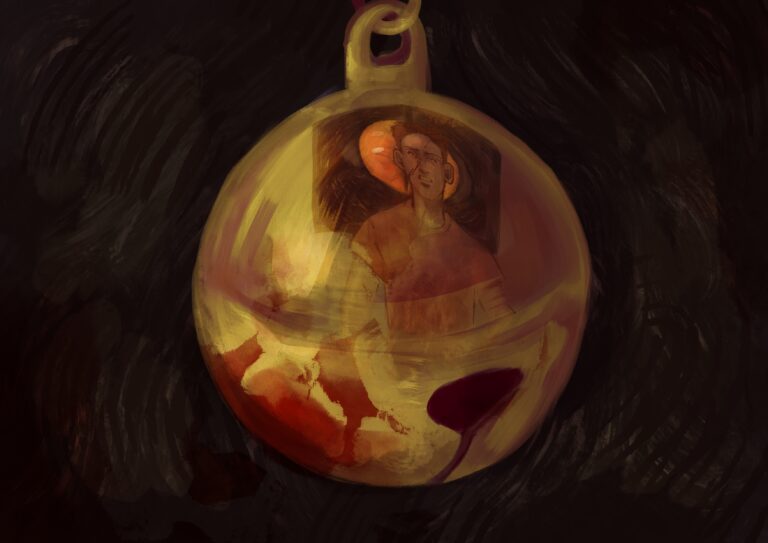
The crown fit my head as an organic extension of myself, forged to the exact curve of my skull, yet I could hear the sharp voice of my mother repeating enough times to remind me that nothing was truly mine. They said the circlet was made for me alone, though I suspect it would settle just as comfortably on anyone willing to bleed for it, the one that lets their people taste fear and obedience in equal measure.
Trumpets gently fell silent as I stepped forward. The throne room stretched before me, a chamber of gold and polished stone, ornate banners draping the walls in colors that had long since ceased to appear cheerful, now only meaning commands and impossible expectations. Candles leaned toward the air as if they also wanted to listen; the crowd below spread out like a tide, patterns of expectation, devotion, curiosity visibly painted on their faces.
“My people,” I said, my voice stable, practiced long before, carrying the weight and expectations I had been taught to fulfill. “Today we stand at the edge of a new era.”
The sea of faces bowed in unison, like they were a single living entity. In the air I smelled a mixture of wax and roses, fresh but clashing with the faint rot of sealed halls. And then my gaze caught him. He was there, hiding near the farthest pillar, the candlelight catching the pale gold of his hair. A faint smile formed a curve on his lips, the same smile that made my chest ache in ways I was certain no one else could understand.
“But from sorrow comes unity,” I continued, as if the words could stand as a bridge from past to present. “From unity, strength.” His solicitous eyes never left mine, his gaze steady and focused, with that quiet admiration that I always adored, the kind that once made me flush in ways I would never admit aloud. For a heartbeat, the gilded walls, the silent courtiers, and the crushing weight of expectation on my shoulders vanished. Only the space between our gazes remained.
“There are those who would call peace a brittle gift,” I said, drawing my thoughts back to the hall, to the crowd that expected a monument, not a ruin. “They are wrong. Peace is not given; it is taken, and once taken, it must be guarded.”
Applause crashed around me, but I scarcely heard it. He hadn’t moved. Not an inch. Not a blink. And yet, he was there, closer than any living soul, closer than the crown that was going to mark me for eternity, closer than the one that had already taken him away from me.
***
The air felt much lighter there, like it was threaded with roses and damp earth instead of the pungent smell of incense. My lungs seized it greedily. I didn’t think. My feet simply followed the path that always led to him. Stillness filled the garden. Lanterns gently swayed among the trees, their light filtering through the leaves that shielded them from the harsh evening wind. The gravel gave softly under my steps, the faint crunch exposing my presence. A nightbird gave one call, then fell silent, as if censored, just like many others in the kingdom. The world had gone still, as if afraid to interrupt. He stood by the fountain: the slow, eternal mirror. For a moment the surface held him perfectly, tracing the sharp angle of his jaw and the fair hair falling over his brow. A breeze disturbed the surface, slicing through the reflection until his face was disjointed, eyes drifting from the nose and jawline severed from the neck. For a split second he was unrecognizable before the water stilled again and his features settled.
You vanished,” he said, stating the fact more than accusing.
“I was needed inside.”
“And now?”
“Now I needed air.”
He smiled, faintly. It reached his eyes, but it faltered quickly. “Air,” he repeated, like he didn’t quite believe me. That single word felt weightless, yet terrible, hanging between us. I stepped closer. The scent of roses was heavy, almost sweet enough to make you choke on it. Dew clung to the petals, small and perfect, glittering like scattered pearls in the lantern light. The garden had been tended too well. Everything living here seemed sculpted, disciplined, as if even the flowers had been taught to show submission.
“You fit perfectly in the garden. Like roses, used by people solely to look at and admire.”
“That’s how being a prince works. That’s something I’m good at.”
His gaze moved over me—not unkindly, but searching, as if he was trying to find the version of me that used to stand before him without the distance. “You weren’t, once.”
The words landed softly but cut clean. They carried that deliberate elegance the Chamberlain called insolence, punishing him for a tongue too clever for his station. But I worshiped that sound. It was a defiance I envied, proof that no matter how low he was made to bow, his mind remained unbent. I wanted to drink in his intellect, the only antidote to the vipers of the court. A moth drifted between us, drawn by the flame of a nearby lantern. It circled once, twice, before scorching its fragile wing and spiraling into the water. A brief shiver went through the surface, causing our reflections to shatter for a heartbeat. He looked down at it.
“Everyone’s different,” he murmured, “the very same light that gives life to us humans can easily kill little creatures.”
“What do you mean by that?”
“That you can’t resist the urge to be a prince like a moth can’t turn down to meet the light.”
“Maybe it’s not resistance,” I said, “maybe it’s surrender.”
He didn’t answer, but his hand twitched, a small, involuntary gesture toward me that he instantly suppressed. The space separating us was no more than a single breath, yet it felt like an impassable chasm. Somewhere beyond the hedge, a servant’s bell rang.
Neither of us moved. Neither of us spoke again. We didn’t need to. The sound finally vanished, but the silence it left had a physical weight. And in that silence, something in me shifted to a quiet, impossible wish that the garden might swallow us whole before someone eventually finds us. The garden was a wound in the palace, beautiful, but forced into submission. The marble balustrades showed where the clinging vines had been violently torn away, and the roses were set in painfully neat grids, pale as they looked underwatered. Dew silvered everything, giving the roses at least some moisture to survive on.
“You shouldn’t come here so late,” he said. His voice seemed worried, but his smile stayed wide and pleased. “If they catch you—”
“They won’t.”
It was meant to soothe him, but the sound was too sharp, a definite command. He heard the edge in it, I think. He only tilted his head, watching me the way he always did, like he couldn’t decide whether to scold me or kiss me.
“Your mother’s guards have sharper eyes than you think.”
“Then let them look,” I said. “They see what I allow them to see.”
A soft laugh escaped his mouth, the kind of sound I liked the most coming from him. “You sound like her when you say things like that.”
I froze. He saw it all; the flicker, the tightening of my jaw. His expression immediately softened.
“I’m joking,” he murmured, reaching out. “Don’t—”
I caught his wrist before he could touch me. Not rough, but firm enough to stop him. “Don’t speak of her in my presence.”
A pause. Then, quieter: “All right.”
We stood there for a moment, close enough to share breath, the silence between us heavy with everything we refused to name. The air smelled of roses and wet moss, sweet and earthy. The scent evoked a painful nostalgia for how happy we used to be.
“You’re bleeding,” he said suddenly, noticing a thin line of red along my palm.
“Just a scratch,” I told him, “nothing worth mending.”
“Then why hide it?”
He stepped closer. The lanternlight caught on the edge of his jaw, turning it to gold. I could see the reflection of the moon in his eyes—the black of his pupils blown wide by the dark, swallowing the shifting green and brown of his irises. The reflection wasn’t round, but broken by water, like the world never quite fit inside him. He took my hand anyway, careful, almost reverent, and pressed his lips to the wound. I felt it all the way to my throat, that sharp ache between want and guilt, the unknown feeling of being cherished when cruelty and demands were only things I had ever known. “There,” he said, smiling against my skin, “better?”
“No,” I said before I could stop myself, “now it hurts differently.”
He lifted his head, and his eyes met mine again. “I didn’t mean to make it hurt,” he whispered. Then he smiled, a flicker of that same reckless enjoyment I loved. “But since it does, it means you are, at least, still mine.” The fountain poured its steady sound between us, the flowers trembled, and for one heartbeat, the world stopped turning, just for us. And when the wind picked up again, carrying the scent of roses and moss, it felt like him. The part of him the world hadn’t managed to take.
***
Mornings in the palace never felt alive.
The light that came through the tall windows was thin and lifeless, as if it had traveled through too many layers of glass to remember the warmth of the sun. The corners were thick with shadow. The air felt cold and unnaturally heavy with the sharp scent of metal and candle wax, all pressed down by her presence. Even the dust seemed to obey. She was already seated when I entered: spine straight, hands folded, every motion same as yesterday and many before. The fine silk of her gown whispered against the chair, each sound deliberate, measured. Even silence bent itself around her, obedient, as though it feared offending her.
“You’re late,” she said, her tone neutral, almost bored like I have disappointed her another time. Her eyes didn’t lift from the plate before her.
“I was walking the grounds.”
“In the dark?”
“The stars were clear.”
She lifted her gaze then, and for a moment, I felt its weight. Gray as mine, yes, but sharpened by the cold, ruling authority she never put aside. “Stars do not need princes to watch them.”
“Perhaps they watch me.”
“Do they?” Her lips curved into a faint smile that could be mistaken for affection if one didn’t know better. A smile that threatened to slice you up if you lingered for too long. “And what do they see?”
“A ruler in waiting.”
“No,” she said, her voice quiet, like a perfect reprimand, “they see a boy who confuses childish impulse with power.” Her eyes narrowed slightly, and the silent servant behind her gave a tiny, immediate shiver.
“The guards mentioned footsteps in the garden last night.”
My pulse jumped. “Rats, perhaps.”
“Perhaps,” she said, slow, deliberate, “though rats seldom leave footprints the size of boots.”
Her silver spoon hovered at her lip, a moment of quiet during which she allowed the threat to sink in. “You forget that walls have ears. And that I built the walls.”
I felt a shiver trace my spine. Not an accusation, not yet, but a clear warning.
“You trained me to be discreet,” I said carefully. “Have I failed you?”
“Not yet,” she said, and grinned again. The smile was thinner this time, tighter, a sliver of white teeth stretched too far across her face. “But failure, my son, is rarely noticed until it’s irreversible. And then…” Her hand tapped the table lightly, punctuating the word. “It is too late to save anything. Even yourself.”
I looked down at my hands, suddenly aware of how exposed they felt, how mortal. Her presence was like a weight pressing down from the ceiling, from the walls, from every stone that held the palace together. Even the servants moved with a reverence, their steps careful as if walking on thin glass. She sipped her tea, deliberately slow, and I could hear the faint scrape of porcelain against the cup. I waited, holding my breath. I knew that the smallest flinch would be noticed.
“The garden,” she said again, almost softer this time, though the edge remained, like a freshly sharpened blade, “is a place for watching, not wandering. The world outside your walls has teeth. And so do those who claim to love you.”
Her words hung in the air, sweetened by perfumed silk but sharp enough to draw blood. I knew she meant more than the guards, more than my safety, though I didn’t yet know how deep the cut would go. I swallowed carefully. “I understand.”
“Good.” Her smile returned, this one colder than the first. “Because the moment you forget, even for a heartbeat… that is the moment you stop being my son and start being a disposable courtier. And I do not tolerate waste.”
The cup rattled in her hand as she set it down, the noise breaking the heavy silence. I kept my gaze low, feeling the weight of her eyes as though they could pierce bone, as though they knew everything I had ever thought and everything I would ever dare to think. I nodded slightly, as much a gesture to myself as to her.
***
The morning unfolded, pale and cold, but it brought no relief. The familiar, suffocating pressure had already settled in my chest; a weight that had nothing to do with the sun and everything to do with my mother. I could already feel the crown’s shadow stretching across my chest, heavier than the walls, heavier than her eyes, heavier than anything I had yet learned to endure. The corridor was narrow and half-lit, its stone walls slick with moisture. The air was heavy with the scent of boiled linen, wax, and soap, a sterile, institutional smell that clung to everything it touched. Lanterns flickered against the walls, casting shapes that twisted and wavered; it was a constant, uneasy motion that only reinforced the sense that nothing in the palace was ever truly at rest. I found him waiting where the servants left their trays, sleeves rolled, hair still damp from the morning rain. The dampness made him look fragile, stripping away the servant to reveal the boy. I wanted to cross the distance between us more than anything.
“You shouldn’t be here,” he whispered, though his hand stretched toward me without hesitation.
“Neither should you,” I murmured.
“I have a reason to be in these halls. Do you?”
The corners of his mouth lifted in a smile that was small but held no fear, and for a moment, I almost smiled myself. But her harsh words from breakfast still threaded through my thoughts. “Rats seldom leave footprints the size of boots.”
“They spoke to you again?” he asked, eyes narrowing as he caught the tension in my jaw.
“She did.”
His expression dimmed. I saw the quick, involuntary flicker of fear tighten on his face. “Your mother.”
“She knows something,” I admitted, low enough that only he could hear.
“About us?”
I hesitated, and the resulting silence was all the answer he needed. He stepped back, and the small space between us suddenly felt more like a chasm. “Then we should stop meeting like this,” he said, voice soft, almost pleading, “at least for a while.”
“No,” I said, sharper than intended, the words cutting through the quiet.
“If she’s watching—”
“Let her watch,” I snapped. The harshness in my own voice hit me only when I saw him flinch. “I didn’t mean—”
“You did.” He took a slow, heavy breath. “You always mean what you say… It’s what I both love and fear about you.”
The cold walls seemed to draw inward, sealing us in. Every stone in the cold wall felt like a listening ear, reporting directly to my mother’s chambers. He turned toward the door, voice softening, almost tender. “I won’t be the reason she hurts you.”
“She can’t hurt me.”
“That’s the worst of it,” he murmured. His words hit me like a blow to the ribs, and the air rushed out of my lungs. I caught his sleeve as he started to leave. “Don’t walk away.”
“Then tell me the truth,” he said, holding my gaze.
“About what?”
“Whether you’re still fighting her… or becoming her.”
I didn’t answer because I didn’t know. And he looked at me like he already understood that silence carried both possibilities. The lanterns flickered, his shadow blurring across the stone. For the space of a heartbeat, it engulfed me, a silent darkness that stole my breath and hammered my pulse.
“Be careful, my prince,” he whispered finally, his lips barely moving, “if this is a garden, remember that growth requires sacrifice, and they will always demand a price for it.”
He left before I could ask what he meant. The sudden absence was cold. I stayed in the corridor, listening to the echoes of his hurried steps fade… and for a moment, I could almost feel her eyes on me, slicing through stone and shadow, knowing everything I had not yet confessed. The silence of the palace fell over me, heavier than any physical wall. Even with him gone, I knew the danger remained, mirrored only by the stubborn heat of my own desire.
***
The chamber was thick with the scent of parchment and dust. The air carried a metallic sharpness, almost tasting of rust and ink. The silence in the stone room was profound, yet every minor sound—a rustle of paper, a shift of weight—seemed to hit with the force of a hammer striking a bare nail. The councilors bowed as I entered, but their eyes never left her, flicking with a mixture of awe and fear, like moths drawn to flame. My mother stood by the great window, her hands resting lightly on the back of a carved chair, fingers splayed as though they could crush more than wood. Her posture was impeccable, her stillness more menacing than any movement. The sharp noon sunlight striking her profile made her seem less a woman and more a specter of command, a figure born from the weight of expectation and cold precision. She did not glance at me; she merely allowed her gaze to fall in my direction, and it was enough to make the marrow in my bones ache.
“Sit,” she said, and I obeyed. The single syllable was perfectly flat, a blade that cut off reply. The councilmen shuffled papers, murmuring about unrest in the outer provinces. Farmers refusing taxes. Guards whispering mutiny. Nothing new. Except for the tension and shared anxiety in the room that made the councilors clutch their silence like a valuable possession. The high ceiling, reflecting the noon glare, created a terrible, open visibility that suggested no word or gesture would go unseen. Finally, she spoke.
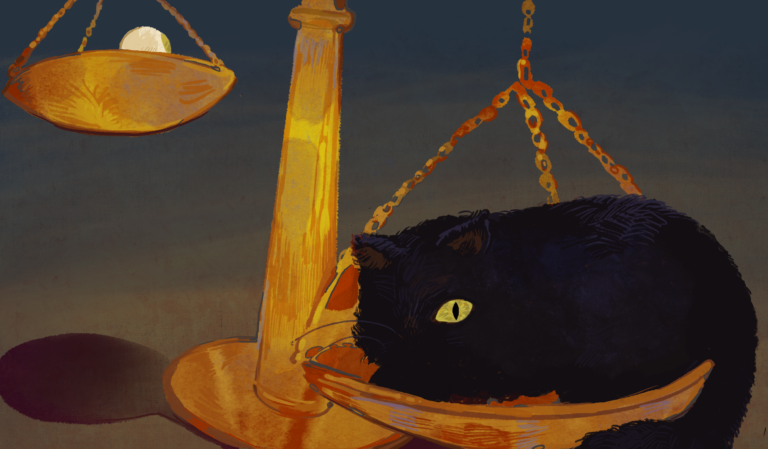
“Loyalty,” she began, her voice low, calm, and dangerous, “is the only coin that never loses value. And yet…” Her gaze moved slowly over the table, then settled too gently, too deliberately, on me. “Even the purest gold can be counterfeited.”
The words crawled under my skin, coiling around my ribs, a slow, paralyzing cold that stole my ability to speak.
“There are rumors,” she continued, each word clear and perfectly even, “of letters passed beyond the palace walls. Of someone, someone close, who believes their own small thoughts are fit for the ears of the outside world.”
“Who?” I asked, the question escaping too quickly, my voice sounding small, almost foolish in the vast chamber.
Her smile was pitying, but it carried the full measure of her disapproval. “You already know the name. Your question is simply a begging for denial.”
The room went still. The air became instantly thin with dread; the councilors stiffened as though a sudden movement would expose all their mistakes. The quills remained poised over the papers, frozen mid-stroke. “I taught you to read people,” she said softly, her tone sending chills down my spine. “Tell me, when you look into his eyes, do you ever wonder what he hides?”
“You mean to destroy him.”
“I mean to secure you,” she countered.
“By ruining the one thing I value?!” I choked out, my pulse thudding in my ears.
“By letting you decide what’s worth keeping,” Her reflection, caught in the bright noon glass, seemed to stare back at me—a second, identical woman, just as hard and cold as the first. “A prince cannot serve two masters—affection and duty,” she said, each word clear and final. “One will demand a sacrifice. The only question is which one you’ll choose to kill to become the king.”
A cold draft slid between us, carrying the faint scent of roses. I shivered, feeling the pressure of her stare tightening like a rope on my chest. I wanted to tell her she was wrong. That love was not treason. That desire and duty could coexist without spilling blood. But even as I opened my mouth, the words turned to ash on my tongue. Because some part of me—the part that still craved her approval, her gaze, her impossible pride—believed her. The council dispersed, leaving me in the chamber with the sound of her steps receding. Her words remained, echoing in silence and burrowing into my thoughts. I walked slowly toward the high window, tracing the cold sill with my fingers, and felt the immense weight of her warning settle on my shoulders. The fierce noon light felt like it meant exposing all my weaknesses.
“A prince cannot serve two masters,” I whispered, letting the words fall into the echoing emptiness. I repeated it again, softly, deliberately, until it stopped sounding like her voice and started sounding like mine, the first heavy thought that had ever truly belonged to me. And I felt, for the first time, that the crown I would one day wear might not be the only thing I would bend to my will.
***
The corridor was cast in half-light, lit only by a single candelabrum guttering at the far end, its flame bending in the draft that slid under the doors. Outside, the thunder rolled over the cliffs. It was a slow, deep rumble that seemed to press down on the entire kingdom, almost as much as royalty did. He was waiting for me again. Always waiting. His back against the stone, hair damp from the rain that had begun to fall, eyes bright in the wavering light. The rose bushes near him had their petals lost in the storm; their scent hung heavy in the air. Sweet, sharp, yet dying.
“You shouldn’t have come,” I said, though I was already reaching for him.
He smiled—the kind of smile meant to unmake resolve. “You said that last time.”
“And I meant it then, too.”
“Liar,” he said gently. His voice was low, drowned by the roar of the wind through the trees.
“You only mean it until you see me.”
I wanted to deny it, but his fingers brushed my wrist, and the cold, wet contact sent a jolt straight to my ribs. “You’re shaking,” he whispered. “She said something, didn’t she?”
“She always says something.”
“This time it’s different.” His hand found my jaw, steadying me. “You look like you’ve seen your own grave.”
“Perhaps I have.”
He frowned, and I hated the worry in his eyes—hated that it was love overtaken by concern.
“Then let’s leave,” he said. “Tonight. Before you become the thing she wants you to be.”
A sharp explosion of thunder cracked directly overhead. Rain suddenly lashed down. His words ignited a wild hope in my chest. Leave. Now. Just leave. But the palace walls loomed like a cathedral to her will, and even now, I could feel her watching from somewhere unseen, her presence folded into the air like incense.
“I can’t,” I said.
“You can,” he insisted, stepping closer until I could taste the faint, clean scent of him, like soap mixed with rain on his breath. “You’re not a prisoner.”
“No,” I said quietly, “I’m the heir. There’s a difference, even if not much of one.” He shook his head.
“You’re choosing her over yourself.”
“I’m choosing what I must.”
“And what about what you want?”
His voice cracked just enough to break me. I caught his face in my hands, the world narrowing to the sound of thunder and his pulse beneath my thumbs.
“I’ll make it right,” I told him, and for a moment I almost believed it myself. “Soon. I promise.”
He watched me for a long moment, as if trying to find something in my face I wasn’t sure I had. Whatever he found was enough. He smiled, and the small, uncertain gesture was devastating.
“I believe you,” he said.
A pause. The storm howled around us, whipping the rain into our faces. He leaned in, and I let him. The kiss was slow and desperate, a final moment of warmth against the cold reality. When we parted, his hand lingered on my cheek.
“Then hurry,” he whispered, his voice cracking on the single word. “Before she finds a way to stop you.”
His hand dropped from my cheek. He held my gaze for one more long, aching second, his eyes full of desperate adoration, haunted only by the shadow of his fear. Then he turned and disappeared into the servant quarters. I stood there for a long time, letting the cold rain wash over me. The lie I’d told had already settled inside me, a core of ice that felt just like her.
***
The dungeons were older than the palace above them. Their walls were the raw, unfinished foundation stone, a sharp contrast to the polished marble upstairs. The air was thick with the smell of mold and rust. They had chained him in the farthest cell. I could tell by the silence before I reached it —the guards were standing with a rigid, unnatural stillness. When they stepped aside, I almost didn’t recognize him. His shirt was torn, his upper lip split. A streak of mud and dried blood marked his cheek. Yet when he looked up, it wasn’t fear nor pain that lived in his eyes. It was betrayal.
“They said you wouldn’t come,” he murmured. His voice was hoarse, raw from shouting or silence, I couldn’t tell which.
“They were wrong.” I stepped closer, the torch in my hand flaring against the damp air of the cell. “I came as soon as I heard.”
He gave a short, bitter laugh. “Heard what? That your mother caught a traitor? Or that she caught your lover?”
The word hung in the cold air between us. I set the torch in the bracket beside the door, its flame hissing as it hit a drop of moisture. “You’re not a traitor.”
“She thinks otherwise.”
“She thinks too much.”
He smiled, but it was more a ghost of one. “Then tell her that. Tell her I am nothing to you. Tell her you made a mistake.” He stopped, his breath catching. “Tell her it’s over.”
I reached for the bars, my knuckles brushing the cold iron. “Don’t say it like it’s over.”
“Isn’t it?”
“No.” The word came too fast. “No. I’ll make this right.”
“Make it right?” He laughed again, softer this time, “you said that last time, and look where I ended.”
Something inside me flinched. “This changes nothing. I meant it then, and I mean it now.”
“Then prove it.” His eyes found mine—steady, unflinching even through pain. “Get me out. Tonight. Or she will kill me to prove her point.”
“I will.”
“You can’t.”
“I can.” I gripped the cold iron with so much force my knuckles went white. “You have to trust me.”
He looked at my hand, then at my face. He watched me, his eyes fixed on mine, as if trying to find the man he knew, as if trying to find the boy he knew beneath the prince I was becoming. “You said that before,” he whispered, “in the garden.”
“And I meant it then.”
“And now?”
“Now I mean it more.”
He closed his eyes, and for a moment the lines of exhaustion eased. “I want to believe you.”
“Then do.” A pause. Then, quietly: “She’ll never let me go.”
“She doesn’t have to.”
He opened his eyes, confused. I leaned closer, my voice a whisper that barely crossed the bars. “She doesn’t have to ‘let’ you. I’m taking you. I have a plan.”
He stared at me, his gaze trying to find a second meaning in words I’d just said. I met his eyes and refused to look away, my jaw aching from the force of holding my expression still.
“I’ll come for you before dawn,” I said.
“And if you don’t?”
“Then dawn won’t come either.”
For the first time that night, he smiled, a weary movement that didn’t reach his eyes. “Always dramatic,” he murmured.
“It’s why you love me,” I said.
He leaned his head back against the wall, eyes half closed. “Then I suppose I still do.”
I pulled the torch from its wall bracket. The flame wavered wildly, throwing our shadows into a final, sharp dance. The darkness of the corridor rushed in to reclaim the cell, leaving him in an instant, perfect blackness.
***
The first gray light of dawn stopped at the top of the dungeon stairs, too weak to warm the thick, metallic air. Down here, I could hear nothing but the constant, echoing drip of water. The silver cup in my hand felt like a cold, heavy weight as I descended. The guards didn’t speak when I passed. They stepped aside, their faces rigid, their eyes fixed on the wall above my head. The only sound was my own boots on the stone, a sound that was the only proof of life in the corridor. When the door opened, he looked up. His eyes were dull with fever at first, but as they focused on me, the disbelief drained away, replaced by desperate hope.
“You came,” he whispered, his voice dry, as if he hadn’t spoken in days. “I thought—I thought they wouldn’t let you.”
“I don’t ask permission,” I said.
He tried to grin but winced as the movement tore at his split lip. Still, the smile was visible in his eyes. “That’s what I love about you.” He tried to lift his hands, but the chain clinked, stopping him short. The sound made something in me twist. He looked down at the shackles and his voice broke.
“I can’t… I can’t even…”
I flinched, my own hands clenching at my sides. He tilted his head. “What’s that?”
“Water.” I knelt beside him, careful not to let the cup tremble. “You need to drink.”
He smiled, “You brought it yourself?”
“I wanted to be sure it reached you.”
“That’s… kind,” he said, the word sounding foreign in this place.
He leaned forward as far as the chain allowed. I lifted the cup to his lips. He drank greedily at first, then slower, eyes closing as he savored the water. When he finally drew back, his breath shuddered. “It tastes clean,” he said. “Like…nothing else.”
I watched a droplet slip down his chin. “It’s from the spring in the lower garden,” I said. “The one with the white roses.”
“You remembered.” He smiled again, opening his eyes. “You always said that water tasted like the air right after a storm.”
“Maybe it does,” I said.
He held my gaze, and his smile, though weak, was real. “Thank you.”
He laughed, a soft sound that should never belong in the dungeon. “Then promise me we’ll go there again. When this ends. When you fix it like you said you would.”
“I will,” I murmured. “I’ll make it right.”
“I knew you would,” he said. “You always do. You and that impossible sense of honor.”
“Honor,” I repeated, quietly. The word felt like ash in my mouth.
“I knew you’d come. I told myself. I told myself you wouldn’t let them break me. I just kept… I kept telling myself to wait for you.”
My hands clenched. I wanted to tell him to stop. To stop trusting me. To stop making this a thousand times worse.
But he looked at me with that same unguarded gaze we shared in the garden, as if we were still just two boys whispering secrets under the stars. “I was afraid you’d forgotten,” he said. “That maybe she—”
“Don’t speak of her.”
“Then look at me,” he said, his voice suddenly desperate. “Just look at me like you did then.”
I couldn’t.
He exhaled, the sound full of disappointment. “You’re here. You’re still you, aren’t you?”
“I am what I have to be,” I said.
His expression faltered, confusion replacing relief. “What… what does that mean?”
I set the cup down on the stone floor. It was empty. “You were right about me,” I said, “about who I am. You saw too much. And that’s what made you dangerous.”
His breath hitched. He looked from my face down to the empty cup. “You… you didn’t.”
“I had to.”
“No,” he whispered with that desperate, childish denial of his. He shook his head, the chain rattling softly. “No, you’re lying. You wouldn’t.”
“I would. I did.”
The color drained from his face. “Why?”
I swallowed. “Because how much I loved you will never outweigh what I was born to be.”
His body went still. His eyes widened slightly, then locked with mine. All the fear had left them, replaced by a heartbreaking gentleness. “You should have let her do it,” he breathed. “Then at least you could’ve stayed innocent.”
“I’m not sure I ever was.”
He tried to lift his hand, to touch me, to curse me—anything—but his arm wouldn’t obey. His strength was already failing.
“I wanted to believe you,” he whispered. “Even now, I do.”
“Don’t,” I said, my voice empty.
He smiled faintly, and it was the same unguarded smile he’d given me in the garden. “It’s all right,” he murmured, his voice slurring. “You’ll be a great king.”
“Stop,” I whispered, turning my face away from his.
The last small tremor in his body ceased. His head tilted against the wall. His gaze, which had been locked on mine, became just a blank, glassy stare. I stayed until the dawn broke fully—until the cold light turned his skin to marble. The silence in the dungeon was absolute now. I had promised to fix it. And I had. I had silenced the problem, just as she would have done. I stood and picked up the empty cup. For a long moment, I watched the light fall on his open eyes—the shifting green and brown now dull, the spark of gold extinguished forever. I waited for the grief. For the guilt. For anything. But there was only a vast, cold quiet inside me. I turned and walked out into the morning. The air outside was cleaner, sharper. Almost holy. They would call me king before noon. But the world already felt smaller—as if, in claiming the crown, I had traded away the only part of me that I truly valued.
***
The preparation was a blur. Hands I did not know dressed me in silk and velvet, the fabric itself was light, yet it settled on my shoulders with a phantom weight, pressing the breath from my lungs. They spoke in hushed, reverent tones, but I heard nothing. My hearing was still full of the dungeon’s absolute silence, of a final, slurring murmur: You’ll be a great king.
I had promised to fix it. And I had.
My boots made no sound on the marble, or perhaps the silence in my head was simply too loud to hear them. I felt the crown settle on my head. It fit as an organic extension of myself, forged to the exact curve of my skull, yet I could hear the sharp voice of my mother repeating that nothing was truly mine. She was wrong. This, at least, I had taken. They said the circlet was made for me alone, though I suspect it would settle just as comfortably on anyone willing to bleed for it, the one that lets their people taste fear and obedience in equal measure. I had silenced the problem, just as she would have done. Trumpets gently fell silent as I stepped forward. The throne room stretched before me, a chamber of gold and polished stone, ornate banners draping the walls in colors that had long since ceased to appear cheerful, now only meaning commands and impossible expectations. Candles leaned toward the air as if they also wanted to listen; the crowd below spread out like a tide, patterns of expectation, devotion, curiosity visibly painted on the faces. I waited for the grief. For the guilt. For anything. But there was only a vast, cold quiet inside me.
“My people,” I said, my voice stable, practiced long before, carrying the weight I had been taught to fulfill, “today we stand at the edge of a new era.”
The sea of faces bowed in unison, like they were a single living entity. In the air I smelled a mixture of wax and roses, fresh but clashing with the faint rot of sealed halls. The smell of mold and rust from the dungeon. The scent of the spring water.
And then my gaze caught him.
No. It wasn’t possible.
He was there, hiding near the farthest pillar, the candlelight catching the pale gold of his hair. But he was dead. I had watched the light leave his eyes. A faint smile formed a curve on his lips, the same smile that made my chest ache in ways I was certain no one else could understand. The same unguarded smile he’d given me in the garden. The same one he gave me as he died.
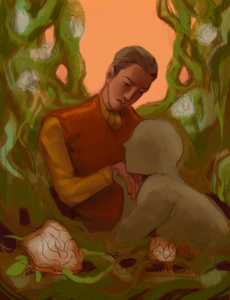
He was a ghost. My ghost.
“But from sorrow comes unity,” I continued, the words catching in my throat, carrying the bitter taste of what I had done. “From unity, strength.”
His hazel eyes never left mine, his gaze steady and focused, with that quiet admiration I always adored, the kind that once made me flush in ways I would never admit aloud. But it wasn’t admiration. It was the heartbreaking gentleness from his final moments. It was the “I wanted to believe you” in his gaze. For a heartbeat, the gilded walls, the silent courtiers, and the crushing weight on my shoulders vanished. Only the space between our gazes remained. The living and the dead.
“There are those who would call peace a brittle gift,” I said, drawing my thoughts back to the hall, to the crowd that expected a monument, not a ruin. “They are wrong. Peace is not given; it is taken, and once taken, it must be guarded.”
It must be silenced. It must be ended.
Applause crashed around me, but I scarcely heard it. He hadn’t moved. Not an inch. Not a blink. And yet, he was there, closer than any living soul, closer than the crown that was going to mark me for eternity, closer than the power that had already taken him away from me.
***
I had promised him we would go to the garden again. And I had kept my word. I brought the garden to him, in a silver cup.
I am what I have to be.
The applause went on, a great roar of sound. It was the loudest noise I had ever heard, and it meant nothing. I looked once more at the empty pillar where his ghost had stood. Then I turned my gaze to the bowing crowd—my people. I had silenced the one man I loved. Silencing the rest of them would be easy.
He was right.
I’ll be a great king.