Read by Katarzyna ‘Catharsis’ Mikołajczyk
Autumn evenings feel incomplete without a cup of warm tea, a comforting blanket, and a dose of horror. This distinct autumnal mood gets better when it is raining–the darkness beyond the window, when paired with a dreadful story, creates a perfect atmosphere of unease. While the obvious pick for such evening would be a horror movie, there is a different recommendation that I have–especially for fans of the classics, even more so for those who find themselves particularly fond of William Friedkin’s The Exorcist (1973). Inspired by the aforementioned title, FAITH: The Unholy Trinity is an immersive story of a young priest, split into 3 eerie video game chapters and perfect for fans of all things macabre.
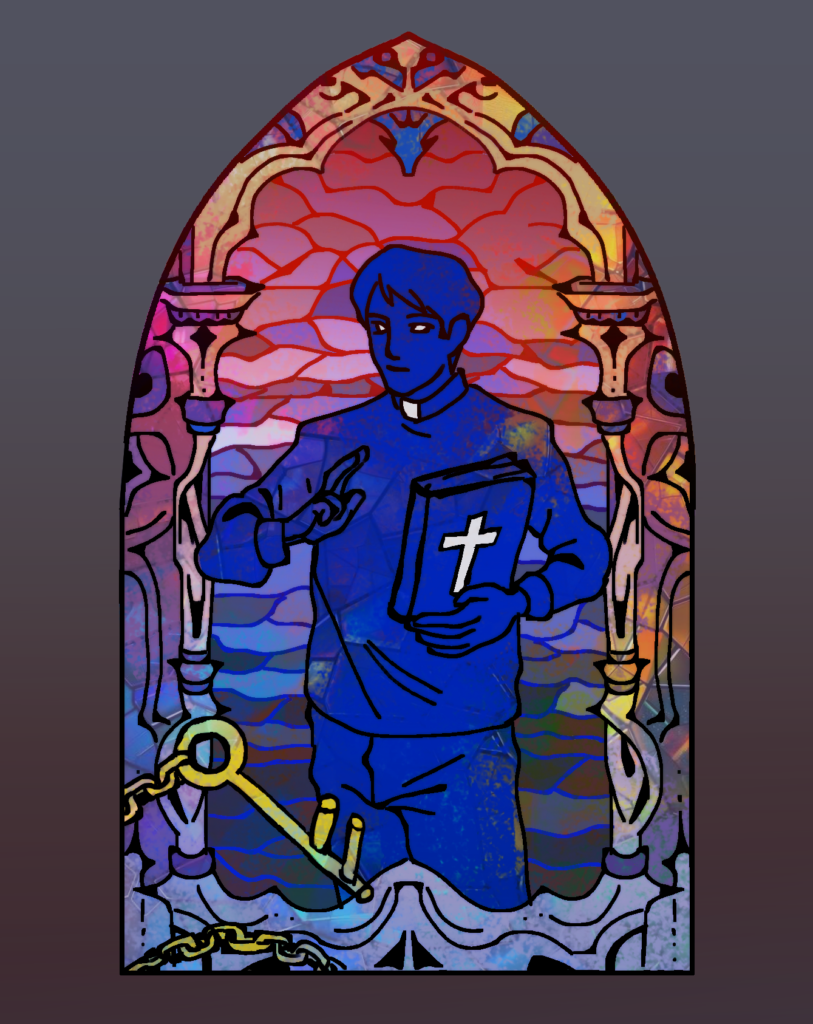
In 1987, Father John Ward returns to Connecticut, where he is to perform a second unauthorized exorcism on a 17-year-old Amy Martin. A year prior, another exorcism had resulted in a tragedy, further fueling his ongoing crisis of faith, as Father Ward continues to blame himself for the deaths of people he cared about (similar to Father Karras from The Exorcist). Upon going deeper into the story, it is revealed that Amy is not the only victim of possession, and something more sinister has taken hold in the area of New Haven, with a mysterious cult acting behind the scenes of the hauntings. It is now in the hands of Father John Ward to solve the mystery of the Satanic cult and its ulterior motives, fighting with the demons and his own self, as his loyalty to God is put to the ultimate test.
Created by a solo developer known as Airdorf, FAITH: The Unholy Trinity is a survival horror game that channels the darker side of the 1980s, with the story inspired by the Satanic Panic and 8-bit games aesthetic, evoking a sense of nostalgia even for players who may not have had the chance to experience such games before. As the Priest, the player must use the crucifix not only to perform the exorcisms, but also to fight back against enemies and cleanse unholy objects. There are also multiple (and secret) endings that depend on the player’s choices and discoveries. The simple graphics give the player a nostalgic feeling, making the game stand out from more semi-realistic titles like Resident Evil or Silent Hill, giving the player an illusion of safety–after all, who is even scared of a few pixels? That illusion fades the moment the player witnesses the striking rotoscope animations also created by the developer. The death screen, which has become an internet meme as well, has a Latin word, “Mortis,” that the player will need to get used to, especially as the game progresses. Airdorf also composed the game’s synth-heavy soundtrack that perfectly captures the old-school feeling, often implementing classical music pieces such as Chopin’s “Revolutionary Etude Op. 10 No. 12” or Beethoven’s “Moonlight Sonata” to twist something well-known and comforting into something wicked and terrifying. This soundtrack works exceptionally well in slower-paced moments, making the player constantly question their safety.
The game has earned overwhelmingly positive ratings, often scoring 9/10 and higher, and upon discovering the story, it is very hard to disagree. Despite being made in 2022, FAITH utilizes its 1980s style, mechanics, and story to evoke fear in every player and horror fan. Those curious about the behind-the-scenes of creating the game can find an interview with Airdorf, made by internet creator Wendigoon, on YouTube. If not in the mood to give the game a chance, the upcoming movie may be more convincing, as the live-action adaptation of FAITH is officially in the works. While adapting a video game on screen is rarely successful, FAITH’s story is so compelling that it will be hard to ruin, and it will likely be loyal to its source.
So, when the next rainy autumn night is cold and your tea is brewing, consider helping Father John Ward face his demons—and maybe your own.