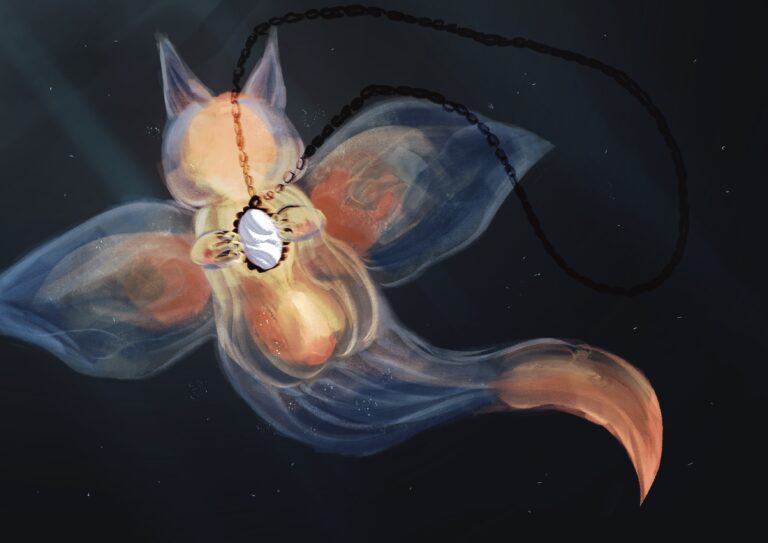
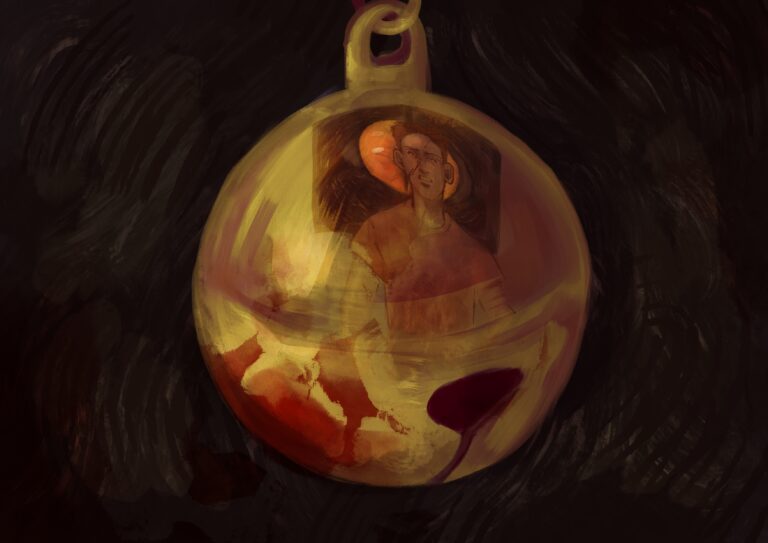
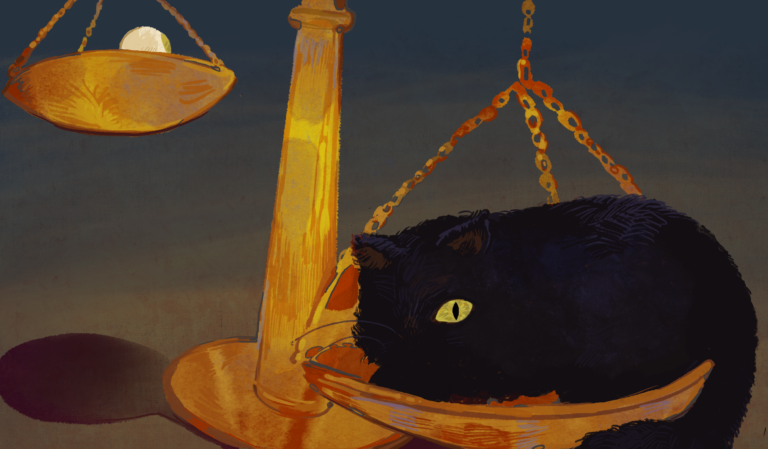
“I want you to believe…to believe in things that you cannot.”
Bram Stoker, Dracula
The old folk know many tales, woven by the spirits in the dark, then chewed and spewed out generation after generation to warn younger souls of the peril in the woods. They sit by the fire and listen to the story about the night of the winter solstice, the longest night known to men, when the children turned into beasts, one more hideous than the other.
Help us God, if a night like this haunts us again.
Those of you who have never lived in the easternmost part of this damned country must know that old traditions and strange, pagan religions never fully died there. The folk might go to church every Sunday, pray to Our Lady Mary, and confess their sins, yet each of them knows a charm or two.
I’m talking simple charms here. How to heal a newborn from a sudden cold, how to predict the name of one’s future husband, or how to make cows produce more milk for the whole summer. Nothing that would bring much attention to you and your folks. And you do not have to be skilled or gifted to use a spell; it is passed down with blood. The blood of your mother passed down by her mother and her mother, too, until there were no mothers and grandmothers, but one. The one who was dear baba to all creatures in the dark woods.
No matter how many hands or legs or eyes you had, she would welcome you to her home perched on a chicken leg in the middle of the bog and, if you behaved nicely, she would help you leave the forest. As for those who never left the woods… Only she would know, and God have mercy on you if you believe she would tell.
However, sometimes blood can be a foul and devilish thing.
Like the blood of those six children born during the winter of 1925. Six children were born that winter, six children lived six days after birth, and six little bodies were buried nice and tight in the forest. They weren’t even baptized. Mothers wept, while fathers or brothers dug out shallow graves in frozen soil on a moonless December night, and those children, like Christmas presents, were given in a piece of cloth to Mother Earth.
What many, including you, might not realize is that this peculiar and merciful mother always returns the gifts she has received. And this mother is never alone. She has animals and spirits and old gods by her side, but the old tale says one of those spirits, like a grandmother, is especially fond of children.
Here the oddity of my tale begins, and those of you who claim they don’t believe in the supernatural might call me mad and absurd. You may accuse me, a humble storyteller and a fellow listener of tales, of making all of this up. But if anyone ever stepped foot on that land, they would pronounce me sincere. Maybe you will too, after knowing what I wish to forget, because whatever happened that night was nothing compared to harmless spells and prayers.
By the time the winter of 1926 came, most villagers had forgotten about the infant bodies buried at the edge of the forest the previous year and busied themselves with preparations for the Christmas festivities. What a beautiful and bright Christmas Eve lay ahead of them!
What contentment. What laughter. And what tragedy descended upon them on the winter solstice of 1926, the longest night in the years behind and the years ahead. The bloodless moon hung low in a dark mosaic of stars when the black, frozen soil at the forest’s edge began to heave.
The air was mercilessly cold. With her back to the forest and her face toward the pitiful cemetery, a creature crouched. Her limbs were twisted and stunted so grotesquely that no human could resemble her, even by choice. Some said she traveled by broom, others swear she sat in a flying mortar. Her small, distorted lips were fixed in a smirk plastered to her horrid face like a wound.
With sunken, hollow eyes, she gazed over the little buried souls in the frozen ground. She mockingly traced a cross in the air, her bony hand moving like a broken bough in the December wind. She laughed, spun three times, and whispered a prayer in a tongue of old bones and forgotten gods.
Now, I have no idea how her hag-like body managed to twist itself in such manner, but I know that after the third unholy twirl, Baba Yaga was no longer a ghastly apparition, but a fat, black goat standing on its hind hooves.
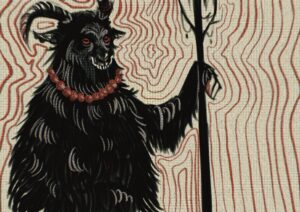
Some folk might tell you it was not a goat, but a wild boar, or a bison, or something else entirely, but equally hellish. It was frothing at the maw, spit dripping and burning the frozen soil away in greenish flames. Soon, the ground started shaking like a baby on its mother’s breast.
From this accursed earth chewed and clawed their way to the surface the devilish creatures which, despite wearing the skin of gentle animals, gurgled and howled, and moaned with desire for warm flesh. All, just like their resurrector, stood on their hind paws, hooves and legs, as if trying to be human again.
They would never again be human, not as they once were, however briefly. Cursed into bestial forms, the children who had died a year before still yearned—as all children do—for their mother’s embrace, her warmth, her love. Wrapped in the fur of animals like kings in their robes, they stood proudly upon the ground where their infant bodies had been buried, forced to wander the earth in monstrous shapes.
The witch-goat spun three times, just as before. Her black figure was draped in a long brown skirt, a light shirt, a flowery apron, and a matching scarf wound around her arms. A crimson beaded necklace clasped her furry neck, and her hoof gripped a wooden staff.
Then, from her throat came a sound so horrifying and sharp that the night stilled, the snow froze midair, and even the wind fell silent.
At their maker’s command, the beasts shifted into the garments of human folk: skirts and trousers, blouses and shirts, wool jackets and scarves. Wearing all that, they could almost have been given human names.
But human names would never suit beasts like these: creatures who, beneath the clothes of human folk, still wore the skins of lynx and wild boar, bison and fox, rabbit and wolf. Beings the villagers regarded either with reverence bordering on worship or with the deepest disdain, for they had devoured cows and sheep only a few winters before.
Yet that winter there was no difference between predator and prey, between the wolf’s mouth and the lamb’s eyes. These spirits had risen from the earth to hunt.
And hunt they did.
Baba Yaga laughed in her beastly, otherworldly manner and snarled to the animals in human clothing that the night of Kolęda would come when their hellish song would light the heavens. The child‑creatures cackled and roared with twisted excitement until the goat‑witch ordered them to gather the old cemetery torches, which she lit with a greenish flame before leading the company toward the village. Thanks to her spell, they appeared as nothing more than those who sang of Our Lord’s glorious birth each Christmas.
A Kolęda stained with crimson had begun.
The villagers sheltered in their wooden cottages, hearths burning brightly against the winter air and snow rising to their knees. Inside one hut, a family sat together: a newborn sleeping in its cradle, a mother mending an old pair of socks, and a father resting with his feet on the hot stove. Suddenly, the night was split by melodious voices, the bittersweet cry of a violin and the enchanting sounds of other instruments unknown to folk who had never left the village.
Next came the soft pad of footsteps and a growl that might have been mistaken for a voice—harsh and brutish, like that of a wounded beast or a lost wanderer on a night so bleak. Finally, a knock rattled the door, making its very boards tremble as if begging the family not to open it, for regret would surely follow.
Yet the man of the house merely asked his wife whether any guests were expected. She shrugged, watching nervously as her husband rose and approached the door. Before opening it, he made the Sign of the Cross, as his mama had always taught him, and grasped the knob as though he expected the devil himself to be waiting on the other side.
On the threshold stood seven creatures whose animal throats produced a tune so sweet that any villager would fall under its harmonious spell. As the poor man lingered there, letting the cold seep in, the witch‑goat stepped toward him, her eyes glowing with hellish fire, her yellowed teeth bared for a feast. She seized the husband as though taking a partner for a dance and spun him three times to the rhythm of a pleasant melody before sinking her teeth into his bare throat, tearing it open like a sin.
Blood surged upward in violent torrents, drenching the monster’s maw and rousing the others to leap upon the woman and her infant. They screamed as the song abruptly died. The beasts laughed as they devoured the wet, spongy flesh of the family, yet even this could not quench their thirst or sate their hunger for blood. So they moved deeper into the village, leaving the mangled bodies behind.
The rest of the village folk met the same fate as that little family of three: their viscera torn apart, their bones ground to ash, their blood spilled across the snow and mud. The carolers carried their sweet song deep into the night, farther and farther, until only one hut remained on the village’s edge, a place that paid no heed to the devilish music.
Inside that hut was a woman who has been a mother once, though she could no longer hear the cries of her one and only child—a child for whom she had dug a grave with her own hands. Well, to be truthful, she couldn’t hear its human cries anymore. For that child had become the finest hunter of the dark woods: the gray wolf.
A lonely hunter howling at night, he was the last soul to die in the year of Our Lord 1925, yet the first to be buried in the new. And as the story goes, such a soul could not rest and could not cross into the new era of men. This child belonged neither to death nor to life, neither to his mother nor to any other. Or so Baba Yaga believed.
Now listen to me when I tell you this: if one mother cannot nurture a child, another will. That’s the law. Mother Earth—whom the human folk, in their eastern tongue, called Matka Ziemia or Mokosza—gathered the wolfish child into her arms and cradled him like a promise. The promise she made the other, human mother of the little soul at her breast: that on the longest, cruelest night of the year, her child would be returned from death under the banner of life, however bestial or distorted that life might be.
That is why, when the murderous procession reached the dark spruce door and three knocks rumbled through the air like an avalanche of snow, the breath of the mother stilled between two heartbeats. The stove still burned with the love and longing of the previous night, when she had waited in hope that her one and only child might be returned to her, as the goddess of old had pledged the year before. She turned her head toward the sound and, though she had not seen its source for many years, her frail body moved instinctively toward the low grumbling, the moaning and growling behind the door. She whispered a prayer or two, made the Sign of the Cross, and padded across the room to welcome her child home.
In the woods surrounding the hut, the lonely wolf stood up and ran towards the door. You see, the wolf-child had returned the previous night but had been too afraid to come see its mother, sensing she would be afraid of its beastly form.
But now the actual beasts showed up at her door.
The witch‑goat listened to the sounds of footsteps, her mouth agape and salivating, spit dripping onto the wet mud and burning the dark soil with greenish flames; a desecration basked in desire for warm, motherly flesh. The whole company of horrendous creatures bared their sharp teeth, snarling and trembling with anticipation for the consummation of their last helpless victim.
The gray wolf hid near the wall of the hut like a shadow, scowling with fear upon hearing the creak of the old wooden door. It cracked open like an egg, like the world that had been lost the year before.
The woman’s nose immediately filled with the unbearable stench of rotten flesh, blood and broken bones, and, strangely enough, of brimstone. She stifled a retching sound leaving her throat with one hand, while the other was grasping the doorway for support, as the intolerable odor almost immediately made her feel uneasy and fatigued. For a moment, her figure stood motionless and recovering from the acidic smell, until she briefly apologized to her visitors for such unmannerly reaction and moved aside to invite the beasts into her house. To her, they were nothing more than poor Christian souls craving the warmth and safety of a motherly embrace, of a home with a burning hearth.
However, in the blink of an eye, the gray wolf leaped into the small chamber before any of the brute, appalling monsters could open their hellish maws and bare their teeth at its mother.
It growled and howled, as if summoning a pack, and pushed the woman aside into the golden-hued room. Here the gray animal stood on all of its four paws, preparing for broken bones and torn flesh.
But the beastly company was tamed with a hectoring command of their witch-master who laughed, gagging on her bitter, burning spit. Suddenly, she looked with her greenish gaze into the first rays of the morning Sun, the giver of life.
You see, he had been looking down upon the unfolding scene of what should have been his uneventful homecoming; a homecoming that had become a massacre of innocents instead. Even at night, he was always watching.
He reached with his sparkling gold finger onto the Earth and set ablaze each of the pandemonic creatures, whose very existence was an insult to life itself.
One after the other, the beasts became scorched mercilessly by the power of the ever-lasting Sun, known all across those damned lands, but in each country, he had a different name. May you be blessed by his warmth if you know at least one. And I hope you do or you shall never witness the day of the Unconquered Sun.
Now, you must know that the only human witness could not see the burning furs and scorched souls of children. Absolved of the sin of murder, they soared away into the home of Our Lord and Maker, finally free from the witch’s evil influence. Yet, she could smell the unbearable stench of charred bone marrow, of boiled blood and of calcified flesh.
The witch looked back at the golden dawn but did not incinerate. Instead, she spun three times like all those times before and disappeared into the cold, merciless breeze, leaving only a crimson beaded necklace lying on the scorched soil.
This peculiar story, this Kolęda has two endings.
According to the men and women from the neighboring village, when the light of dawn that rose in the East lit the beasts on fire, a lonely wolf chased the Sun across the fair horizon and swallowed it. They spoke to me greatly of the frightening darkness which followed and of spirits whose names could be spoken only after whispering a few prayers with a grandmother’s rosary in one hand and a wooden cross in the other. Such spirits who have pursued the souls of men into their hiding places long before the Son of God sat on his throne among the heavens.
Was it His mercy that allowed the Victorious Sun to return to those desolate, abandoned cottages smeared with old blood, sprinkled with burnt, blackened ashes? It matters not. What matters is that the fiery fingers of the Sun were not merciful towards the godless wreckage as he unleashed his glowing wrath, burning the old huts with the memories of that fateful winter solstice night of the year 1926 away.
Nothing remains there to this day, and I can tell you that with confidence. My feet had wandered far but my old, impaired vision witnessed only ashes and barren soil, which reeked of sin. I made the Sign of the Cross and left, never looking back.
The second ending of the story is less bizarre than the one I have just told you, yet it is equally unbelievable for any folk who has never lived in this part of the country, where tales of the old world merged with the new ones. A place where stories were meant to be told and listened to in the company of family and strangers alike; not reduced to ink on paper and read in the silence of solitude.
The tradition compels me to explain the ending of the story as it was recounted to me, my dear listener, by my grandfather who had the soul of a hunter, and was a protector of his blind mother, who howled at the Unconquered Sun and was spared the violent conflagration. Because in this version of the story her child didn’t return as a wolf after all.
While the mysterious big fire swallowed the nearby village, it spared the hut in the woods where the grieving mother lived, awaiting her child’s return.
Its cursed soul was blessed by Mother Earth and protected with the harmless charms and powerful prayers of his mother. It was brought to her earthly, wooden cottage in the hands of Mokosza who, despite freezing winds and snow reaching up to her knees, wandered barefoot through the remorseless, bone-colored fields until her feet reached the doorway of a home that had witnessed wrath of a god. She knocked on the wooden, heavy door, listening to the gentle, melodious voice pouring out from the inside and began humming a tune forgotten by the new, meticulously ordered world; a world she could never be a part of.
The door made a prolonged, low sound before it opened fully and one, human mother welcomed the other who smelled with a pleasant scent of freshly harvested wheat and wet, freshly sown soil. Mother Earth spoke in a tongue native only to the high-soaring birds. For when she opened her mouth, all creatures could only hear delicate chirping of finches and swallows heralding an approaching spring. An abundant spring, which revived all souls whose paws, hooves, wings and fins were buried tightly under the thick snows and frozen waters. Yet, one human soul was awakened before all other creatures and returned to its mother from the clutches of cold, lonesome grave at the edge of the forest.
From one nurturing mother to the other, the child wrapped tightly in wolfskin, whose thick, consecrated blood runs deep within my veins, was brought back into the embrace of life. It looked like a child of the Sun, beautiful and unconquered. It looked like a gift from the gods.