My darling son,
The inquest has come and gone, as has the funeral. The cuts and bruises healed first, then eventually the broken arm and six broken ribs. My neck still twinges in the cold, a reminder of the whiplash, that violent microsecond where my head was jerked from one space to another.
I haven’t gone back to work yet, and I don’t plan to return anytime soon. Thankfully, pet people are massive saps so when I ring up sounding teary they always give me the same sentimental spiel:
‘We’re a family here. You take your time. Your mental health comes first…’
They likely begrudge still paying my salary, but what can they do? Everyone believes I am on the brink of something awful. It would be heartless to sack me now.
Cherry told me they’d lit a candle when they heard the news, just like we do when we’re putting down a pet. ‘Out of respect,’ she said. It didn’t feel respectful. But, like I say, pet people are saps. Especially the dog-type, which Cherry is. She took a whole week off after her Labrador died.
You remember Benny, don’t you? Big, smelly, bellowed like a monster, but you liked it. When Cherry brought him in she realised there was a receptionist vacancy and, to my horror, believed it to be fate. Serendipitous, I suppose, that Benny decided to eat that beehive. You sat stroking it for twenty minutes while it whined, its mouth blown up like a bouncy castle. You felt extra sympathetic because you were allergic yourself. You were just a baby when that bee attacked you, so you won’t remember how you nearly died, but the fear persisted. Whenever anything buzzed near you, even a housefly, you began screaming in high-pitched bursts and swatting pathetically. It was probably my fault. I was also hysterical around anything that flew. You’ll have picked it up from me along with the other quirks.
God, you were such a good boy at the vets. I felt terribly guilty, of course. I should have been at home, but I just couldn’t. We needed to eat so I needed to work, and you’d sit in the waiting room the whole hour and half until I finished up. I couldn’t even speak to you, the phone rang so often, and the nosiness of Cherry made any conversation we had feel unnatural anyway. But you never complained. You just sat there with your book-bag, reading whatever it was at the time, stroking the animals until I could clock off and go home.
Do you remember the strange woman who brought in a litter of rabbits? Oh, but obviously, you must. How old were you then? Around eleven? And so excited you were squeaking with giddiness. When she opened the crate and let you hold the runt, you suddenly became so still, watching the closed-eyed, pink, fleshy thing breathe, its tiny chest rising and falling. It was like you were holding a human newborn, there was so much awe in your eyes. I always try to picture you in your Year Seven uniform holding that baby rabbit whenever those kids spout their nonsense on social media. A bully, they call you. How absurd. You were far too soft, too quiet. You never drew attention to yourself or caused a fuss. That’s the reason you struggled with friends. There was only ever that one serious incident, and that was dealt with when they dropped the charges. It hardly means you deserved to be crushed, your pubescent body folding into the metal of a removal van.
I saw you, you know. They tell me that I wouldn’t have because the impact must have knocked me out right away, but I remember it in slow motion, the way your torso crumpled as though it were made of putty, the realisation in your eyes that it was ending, the airbag expanding like a Labrador’s stung mouth, futilely protecting a body that was already limp. I woke up days later to the news that you were gone. Nothing happened to the driver of the removal van. It was very apparent the accident was my fault.
‘What happened?’ the doctors ceaselessly asked me.
The assumption was that I must have suffered some kind of seizure to drive so recklessly into oncoming traffic from a standstill. I told them:
‘There was a bee in the car. I panicked. I wasn’t thinking. My only thought was get him away from it even though it was in the car. He would have died if it stung him.’
I could see them all thinking it, although no one was so callous as to say it aloud: But he died anyway. Mostly they just felt horrified for me — a maternal instinct so strong it causes you to plunge your child into oncoming traffic. That’s what they all said in the end. It was love that drove me to make such a mistake. Some mothers find the strength to lift cars for their children. Others have the incompetence to crash them.
I know I wasn’t alone in thinking you were adorable. That odd woman with the rabbits obviously thought so too, or else she wouldn’t have let you keep one when it weaned. She dropped it off at the vets, in her orange cardigan and dowdy dress, carrying the singular rabbit in an oversized cat carrier. It was the runt, of course, although now it wasn’t pink but black and white like a Friesian cow and recognisably cute, a wide-eyed Disney thing rather than a Cronenberg prop. We spent the weekend putting together an IKEA hutch.
It did seem to remember you. It would snuggle into your arm when you lifted it from the cage, pink nose twitching as though to better catch the scent of 12-year-old boy. Then it started to bite, really nipping hard with malice. It only lasted a few months. When I found it dead in your bedroom you sobbed hysterically. For the life of me, I couldn’t understand why you were upset. The mess was terrible to clean up. I never fully got the red out of the carpet.
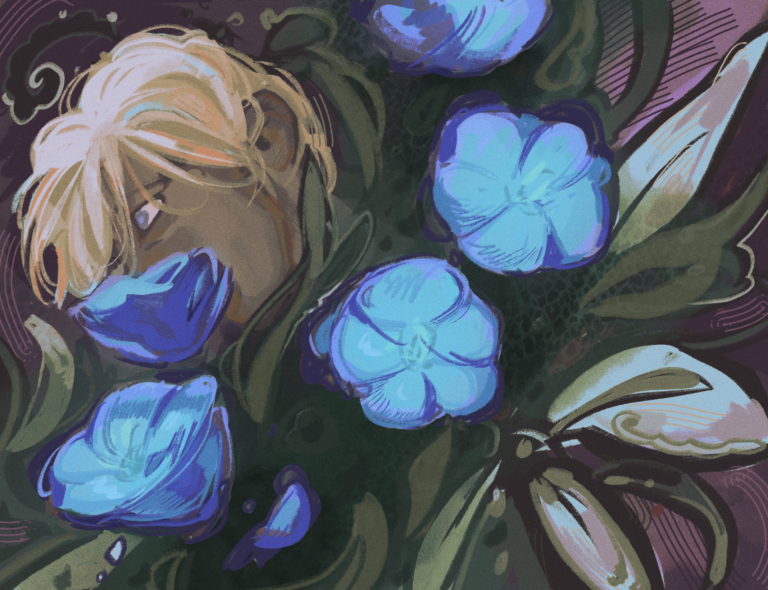
To cheer you up, we hosted a funeral, dug it a little patch in the garden that I then sprinkled over with wildflower seeds. The soft dirt from the digging caused the neighbour’s ginger tomcat to shit in that one particular spot, which pissed me off tremendously, and truly offended you as you felt it desecrated Flopsy’s spirit. I suppose it was lucky, in a way, that the orange bastard went missing soon after.
It will have been hit by a car, I mused when I saw the ‘missing’ poster. The printer ink had run inside the laminated cover. The bright red ‘REWARD’ sign faded to pink. I wondered why they offered a reward. Did the family sincerely believe that their silly little pet, worth so much to them alone, was being held for ransom by some psychopath hell-bent on £200? It wasn’t that I didn’t understand the desperation. People do crazy things for their pets. I regularly saw broke families spending tens of thousands of pounds for life-saving operations, only for the pets to leap from a windowsill a year later. It was the idiocy that so angered me when I saw those ‘Lost’ posters flapping helplessly on the lamp posts. The pleading tone was so misplaced. The cat was not in the hands of terrorists, but had likely wandered onto a railway track. Christ I thought, have some common sense about it.
It might seem harsh that I couldn’t comprehend their reward signs, or indeed your grief at the death of Flopsy. I suppose my job had desensitised me. You were crying so, so terribly but darling, why? You were the one who’d killed it?
This is why they should bring back dissecting in Science class. Clearly, intelligent, inquisitive children have a curiosity that should be encouraged in an appropriate environment. Instead, you took matters into your own hands and then found yourself riddled with guilt. You must have known I wouldn’t let you get another pet after that. It might well have been a one-off, but I couldn’t take the risk. I would catch you afterwards in the waiting room watching the creatures. I knew, more than anything, you wanted to take one home.
Then there was the poor whippet who’d been knocked down after jumping over the owner’s back gate. It was still conscious, but there was a gash on its ribs from the road friction. Thankfully, it was chipped and the owner was on his way, rushing like a maniac to get his injured baby home. The whippet pined so sadly, its chin resting on the driver’s lap, big, brown eyes noticeably wet, even from a distance. It was amazing how trusting it was. And the driver who’d knocked it down was a sweetheart. He dropped everything to take the dog to get help, even settled the bill, which was extortionate. His leg jiggled restlessly under the dog’s head.
‘I’m sorry,’ he said, to get my attention, ‘I’ve needed a wee for about an hour but I didn’t want to leave him. Can you keep an eye on him for one sec ‘til the owner comes?’
‘Of course, go, go,’ I waved a hand.
You’d been watching. You always were. You sidled right up next to the thing and started patting its head. I smiled. You were a good boy, really. Gentle, just like you had been with Benny. I felt, perhaps, I could reconsider a future pet, if that violent blip turned out to be just that, a blip. What child wouldn’t underestimate the strength of a hammer, think they were playing a game? I glanced at my computer screen for a moment, looking at the schedule to see where it would be possible to fit in annual vaccinations for Mrs Waterson’s ancient cat, when I heard the whippet’s pining turn to yelping. I stood. The whole weight of your hand was pressing into its ribcage, right where the bandage had been placed.
‘Darling, what are you doing?’ I cried.
You didn’t lift your hand immediately until you saw me walk towards you, and then you moved to the other side of the room, sat back down next to your book bag, the offending hand stuck in your coat pocket. The dog was barking maniacally, and you were pretending not to notice.
‘Why did you do that?’ I asked.
The toilet flush signalled the driver’s return.
‘Is everything alright?’ He asked, panicked. When he approached the dog, it snarled at him. ‘Alright, mate?’ he asked, gently. ‘You’ve changed your tune.’
It growled until the owner came to retrieve him, and even then it didn’t entirely settle. I worried that what I’d dubbed your scientific curiosity had permanently altered the temperament of what would otherwise have been a lovely dog.
Afterwards, you said you didn’t understand why I’d been so ‘freaked out’. You were only stroking it, you said. I asked about Flopsy, were you only stroking him too? You shrugged again, your eyes staring out the car window as the landscape changed from town to suburbs and the trees became black skeletons against the indigo sky.
After that, I got a key cut and said you could let yourself in after school. No more waiting for me to finish at the vet and drive you home. You had to get the school bus, which you hated, described in detail the sordid journey full of spit balls and mooning, but I’d decided that thirteen was old enough. You could make your own way home, watch the telly, do your homework. I thought I was doing the right thing getting you away from animals, from temptation. Evidently, I got it wrong.
That’s when it started to go noticeably awry. Parents evenings changed. ‘Clever but quiet’ turned to ‘we really must have a word about behaviour’. There was the bullying, God the bullying, I felt like I was being dragged in every week. It seemed like they were just looking for excuses to suspend you. And of course, it was never considered a two-way thing, no. It was always you who was supposedly in the wrong, so no one ever asked why you cut off the ponytail, or what they were doing before you plunged the compass into their hand. It was just isolation, suspension, threatened expulsion, a general consensus that you were the problem. Give a dog a bad name and hang it, that’s what they say, and that’s what the school did to you.
The permanent exclusion came after Ella. I remember that phone call, rushing over from work in my receptionist uniform and name badge, hoping there was some confusion, knowing deep down that there wasn’t. Permanent exclusion, they informed me, and no, there was no point arguing, and no it couldn’t begin at the end of the day, I had to take you home now. I cried in the car and through the tears tried to ask why you’d done it but of course, you just looked out the window.
‘Do you like seeing me like this?’ I asked you, my voice warbled and irritating even to me. ‘Do you like having me drive you home in floods of tears?’
‘Better than the bus,’ you said, coldly. I was too shocked to say anything else.
When we parked, I didn’t wait for you; I slammed the car door leaving you to extricate yourself. The front door key wouldn’t fit in the lock, my hands were shaking so badly, and in frustration I kicked the door, making an dent where there might have been a cat flap. My mind drifted back to the stupid ‘LOST’ posters, and the tearful neighbours who no longer bothered knocking on doors and I felt irredeemably furious.
Obviously, I now understand that the anger was misplaced guilt. I didn’t think I knew, but I must have subconsciously noticed the smell.
I never planned to be the sort of mother who snooped. Probably, I understood it wouldn’t be pleasant if I did. Even if you were normal, I expected pornography and crusty socks,, all the usual teenage sord-oddities. I hoped it was mouldy food. I knew it wasn’t. It smelt too earthy, too much like the infections older animals brought into our surgery.
On an internet forums for mums with troubled teens, I found a thread from a woman who discovered the reason her Tupperware had all gone missing was because her son was storing his shit under his bed. Literal shit, mind. He was so busy playing Halo or Fortnite that he didn’t even want to leave his room to piss, so he’d been doing that in plastic bottles for a while. She’d told him off, threatened to take away the consoles, but he carried on. Obviously, he’d since taken to shitting in his lunchboxes and sliding them under the bed. He ‘intended to clean it’ he claimed, but the mother swore there was mountains of the stuff, and the room had smelt so disgusting he looked relieved to be caught.
‘Honestly,’ she typed, I can only imagine through a sheen of desperate tears, ‘I sometimes wonder what I did to deserve a son like this.’
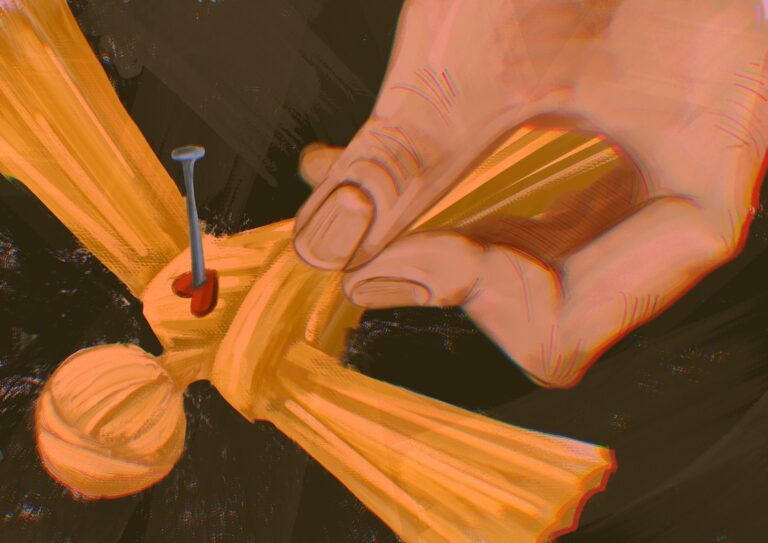
I rummaged under your bed. I hoped it was Tupperwares full of shit. Of course, it was the cat. Any idiot would have guessed it was the cat. I was used to dead animals, but the decay affected me. Its limb-bones were broken inside the skin. I gagged. As I cleaned it up, I told myself an array of comforting lies.
‘This is because the cat shat on Flopsy’s grave,’ I thought. ‘He was angry at the time, but he’s had his revenge now. If anything this proves that he’s rather too sensitive…’
Oh, honey, you can tell me now. There won’t be any consequences. Did you even remember the cat shitting on Flopsy’s grave? Perhaps unconsciously? I would hate it to have been nothing but an act of violent curiosity.
When I vacuumed up the greasy, matted fur, I lit a candle in your room. The lavender didn’t cover the smell, it just mingled with it, making everything sickly.
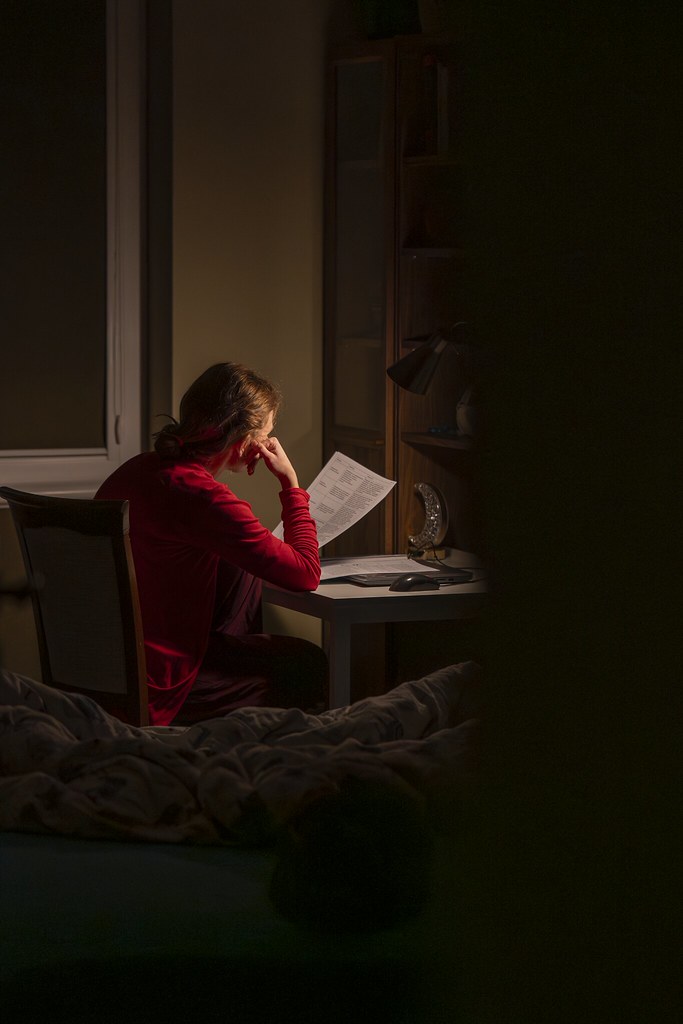
I waited for you to come home, sitting in front of the telly, an overly sweet coffee beside me because I’d heard hot tea with sugar was good for shock. I only drank coffee, and frankly, I wasn’t shocked. It occurred to me I didn’t know where you were. I couldn’t imagine who with because you didn’t have friends, and even if you did they’d be at the school you were banished from. I wanted to text you, to tell you to get home now because we needed to talk, but that clichéd pretence of maternal sternness would only serve to push you further away. Instead, I whittled away time watching home renovation shows, getting surprisingly invested in whether an obnoxious middle-class couple would choose their holiday home in Majorca or the Scottish highlands, when I heard the front door click.
‘Is that you, love?’ I’d asked.
‘Yeah,’ you started up the stairs.
‘Come here a sec.’
You did, impatiently. I knew when I saw you, the same features you’d had since infancy, the same blank eyes and thin lips, a face draped over boneless cheeks, that I wouldn’t say anything. I wasn’t brave enough to shatter the illusion of innocence. I hoped you’d do it for me, break down in tears at being caught, relieved you would finally get the help you needed.
‘I’ve given the house a quick clean. Your room too.’ You gave away nothing. No part of you looked pensive or scared. If you knew what I’d found, you didn’t care. I waited, but you weren’t going to indulge me by reacting. ‘Try not to let it get that messy again, love.’
‘Alright,’ you said, and I’d like to hope in response to my heart-wrenched expression you added, ‘Sorry.’
‘Can I have a hug?’ I asked. You acquiesced with a single arm. Still I snuggled into it like the baby rabbit used to, remembering the sweet boy you once were.
‘Can I go now?’ you asked. ‘I need to dump my rucksack. It’s heavy.’
‘Yeah, sure, sorry,’ I said, wiping my eyes with the back of my hand. You didn’t comment on my crying, didn’t ask if I was alright. I wished you would. I even wished you’d tell me to fuck off, to stop being wet, anything to show some regular adolescent emotion. You retired to your room. I never did find out what you’d been doing all day, or what presumably dead thing was making your rucksack so heavy.
I do partly blame the school. Where was the counsellor for cases like this? Instead of expelling every child who has a bullying episode, aren’t they supposed to challenge them? Ask some probing questions and get to the root of the problem? Weren’t there professionally-trained child psychologists who knew all about ‘Warning Signs’ and ‘Prevention’? I read about it on my Mum Forums. Surely, our tax money should be supplying that, especially in cases like yours. Especially after what you did to Ella.
She’s doing fine, by the way. It took two operations but the scarring is minimal and, ability wise, she’s nearly as good as new. Actually, out of everyone, her parents were some of the kindest at the news of your death. The Facebook message made me well up with shame:
‘We just wanted to clear the air and offer our condolences. Even after what he did, we wouldn’t wish this on any parent.’
That was from her father. A kind consolation. I thanked him, sarcastically adding that I supposed you’d been punished enough now – we both had. As a true mark of class he didn’t take the bait.
‘You can’t blame yourself. The crash killed him, but it could just as easily have been the bee.’
Suppressing my bitterness, I had to thank him again.
But darling, between us two, with an understanding that I can keep a secret – I mean, I cleaned out that rotten corpse from under your bed and said nothing to no one – we both know the truth, don’t we? There was never a bee.
It is true that things didn’t go to plan on that car trip but I did mean to kill you. The night before I’d watched a Columbine mother do a TED talk about recovering from her son’s shooting. She was a broken woman trying to make sense of all her disjointed pieces and, without an answer, she settled for putting her crumbled self on display.
‘Look,’ she seemed to be saying, ‘I’m alone and I’m grieving and I’ll never recover. Can you forgive me? Please? Forgive me.’
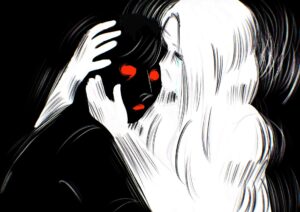
But self-flagellation was never our strong suit. Cherry lit a candle for you after you died physically, but I lit one myself the second you were dead to me. That cheap lavender candle was a funeral pyre. The hug was a final embrace. I’d like to think you knew that too. It didn’t go to plan in that car, but not because there was a bee (there wasn’t), and not because I hadn’t meant to kill you (I had) but because I’d meant to kill myself too.
Now, they ask when I’ll return to the veterinary reception desk to surround myself with sentimental pet people, to light candles for the families who are saying goodbye, to maybe cry and pretend that I mean it. I don’t think I deserve gentleness or simplicity. I don’t think I deserve suicide either. It is too quick a punishment for infanticide, and it wasn’t an infanticide I could even justify as insanity. It was your bog-standard, tragic, domestic murder. But then, you know all about that, don’t you?