As the Domestic Gothic issue of Polish Gothic was nearing publication, I went to see a performance based on Dracula at the Mountain View Center for the Performing Arts. The scenography included an array of domestic spaces that matter in Gothic fiction: a drawing room, a castle, and a mental asylum. What unites these spaces in Gothic imagination is not an overwhelming desire for blood but intimacy combined with danger. A drawing room, unlike a dungeon, ought to be safe. A family home ought to protect. An asylum ought to heal. Gothic emerges when precisely such spaces become threatening.
All the stories presented in this issue feature one or another aspect of the paradox of home: the place that shelters us is often the same place that wounds us; yet outside it there is only exile. Or is there? Leaving toxic domesticity behind may feel terrifying at first, and requires both courage and preparation, but some of our stories suggest other possibilities: chosen kinship, unexpected alliances, and forms of belonging that do not depend on blood or inheritance.
Beautiful house. Desired house. A house as a silent witness. This means, complicit. A house like a trap. A house with no exit. A house of perverted beauty. We find this kind of abode in Karolina Wolniak’s Hortus meus. Because what is a house without a garden? And at its center, a harmless eternal spinster, a piano teacher luring us in with her unreliable narrator’s voice. She is brilliant and delusional, taking pride in her atheism and her intellectual superiority in a manner worthy of Poe’s most unreliable narrators. For a moment, we find ourselves rooting for her as she outwits the investigators. The only certainty we have is that here crime is not a substitution for unspoken desires. A murderess is a murderess is a murderess. Yet whatever original motive may once have existed can no longer be recovered.
Dark domesticity is often associated with the husband-wife dynamic, from The Yellow Wallpaper onward. Yet many of the stories gathered here are less concerned with marriage than with unequal dependencies between adults and children, parents and daughters, caretakers and those in their care. Rabbits, meanwhile, recur throughout the issue with surprising frequency. Perhaps this is because rabbits can be both food and pet: neither wholly companion nor wholly livestock. We would hardly imagine serving cat soup for dinner, but rabbit soup remains conceivable. Maria Wieruszewska’s A Rabbit Soup bears this out almost in passing. Its real concern is the daughter’s perspective: her loveless family, and the exhaustion of caring for a mother who never cared much for her when she was a child and now possesses neither the willingness nor the decency to pretend otherwise.
Sometimes the adults are trying. Sometimes the child is still unbearably alone. The rabbit reappears in Kathryn Leigh’s 1999, Year of the Rabbit. Here, however, it becomes an expression of the sister’s hopeless love for her brother. With all the therapeutic talk missing the point, her solitude among well-meaning becomes so painful that all the sister desires is to crawl into the rabbit hole and vanish.
Mothers can be terrifying. A child has few defenses against a mother’s version of events, particularly when her narrative is wrapped in the familiar language of grief. The narrator of Cathleen Davies’s Pet People is brilliant, tactless, and spectacularly unreliable. She mocks sentimentality while depending upon it, counting on our instinctive reluctance to question suffering. The contemporary gothic mother relies precisely on our reluctance to question grief. In the process, she attempts to turn us into pet people, because even when doubt begins to creep in, what we are up against is the social prohibition against doubting the bereaved.
In Jan Piszczek’s rendition of a classic Gothic tale, the patriarchal mother is certainly terrifying, but she is not the center of the story, at least not as much as she would like to be. Faustian Love is about the daughter’s, Yana’s pent up anger, which occasionally brings to mind Leonora Carrington’s Debutante. It is also about Lucy’s quest, initially driven by a desire for revenge. The mysteries of the Horned Goddess aside, Lucy is ultimately just a girl condemned to exist as a divided being until she discovers affinity with another girl. Yana has to reach out and embrace the unknown to be released from her particular entrapment. Lucy feels simultaneously ancient and contemporary, as though a figure from medieval demonology had stepped into a modern conversation about identity without losing any of her mystery or power.
Many domestic Gothic narratives concern women trapped in homes. Here, however, some women become the force haunting the home itself. Such is the case in Husbandry by Adrian Kafarski, a story that is at once a Gothic medical mystery, a tale of toxic caretaking, and a reimagining of the immortal bride. The ancestral house gradually reveals its historical layers, aptly reflected in the changing language of generations of doomed husbands. We are not expected to pity those husbands, who are victims perhaps, but of little more than their own conceit and greed. What matters is that Cordelia is magnificent. And victorious. And intensely lonely. So I envision her hanging out with Lucy sometime.
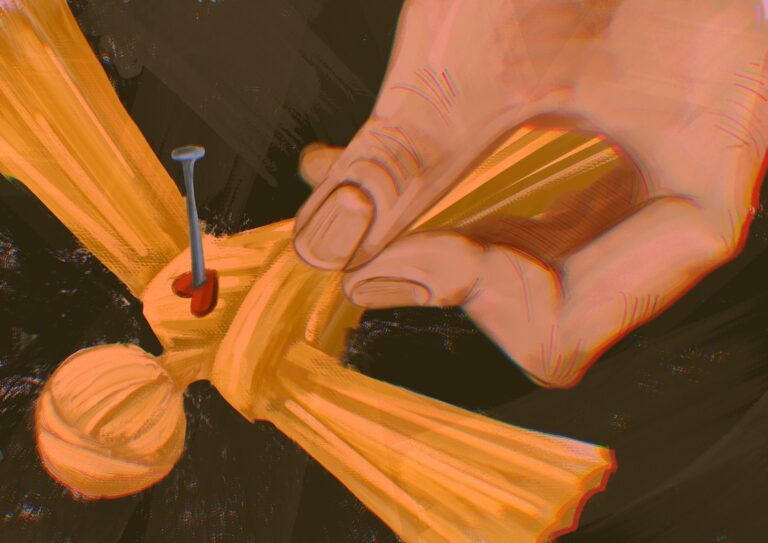
If Lucy and Cordelia possess supernatural resources unavailable to ordinary people, the protagonist of Darya Rusak’s I Have Straw in My Bed does not. Her transformation emerges instead from loneliness itself, as though deprivation becomes a form of magic. What happens when a girl is friendless, overwhelmed, and exhausted, when she has neither powers nor inheritance to rely on? She turns inward until that inwardness becomes a kind of enchantment. Here, withdrawal is transfigured into metamorphosis, and loneliness itself acquires the logic of a fairy tale. Any girl who has ever felt abandoned will recognize this particular magic.
Last but not least, we feature a review of the musical Next to Normal by Pola Walukiewicz, which revolves around some of the most familiar and yet veiled aspects of family life: mental illness, grief, and denial. Such experiences are often difficult to confront directly because speaking openly about them may itself become a source of distress. Gothic offers an oblique way of facing and not facing them at the same time. The solace is found in excess: it is not enough simply to grieve; grief acquires a body, a voice, and the power to answer back.
Domestic gothic is about the dread of belonging. But then try to imagine not belonging anywhere. Even the daemons yearn for some kind of abode.