Three drops.
Four.
As the glass dropper hovered over the porcelain cup, Arthur held his breath. Nervous sweat made the cobalt-blue apothecary bottle slick in his hand, the ribbed edges digging a pattern into his palm. Fowler’s Solution. A true triumph of modern chemistry used as a medicine had another great use. And Arthur knew that too well. With a slight squeeze, a single droplet plummeted into the dark liquid. He stirred the steaming Earl Grey with a slender silver spoon. A thick curl of bergamot vapor twisted upward, carrying the sweet-metallic smell of arsenic. Just as he planned. Undetectable, unless you worked in a medical field.
Arthur picked up the tray, only to frown at his distorted reflection in the teapot. The curved metal turned his sharp jaw into a sallow mask, and bleached the normally piercing green color of his eyes. Raking a hand through his short, brown hair, he tried to slick it against his sweating scalp. A deep shiver rattled in his shoulders and spine, making him clutch the mahogany sideboard with his hip braced against the wood. Caretaking was a grueling endeavor, and the gloomy corridors of this monstrosity of a house were enough to sap the vitality from any man. He rubbed the side of his neck. Right over his pulsing jugular, two tiny insect bites had swollen over the weekend. Spiders, undoubtedly. The estate was full of them. He felt like he wouldn’t be able to count them all. And he was a man of intellect, after all. Stepping out of the kitchen and into the hall, Arthur felt the worn-out wool runner completely smother the sound of his leather shoes. Heavily varnished, dark oak paneling lined the corridor, drinking the light from the flickering gas sconces. The architecture itself seemed built to swallow any sound. With walls so thick that not even the slightest murmur could go through from the adjacent rooms. The estate was designed to grant the man of the house absolute peace of mind. Or so Arthur thought.
He thought of his own family home far in Boston. The Ashfords maintained a grand, chaotic estate, bursting with the gossiping aunts, loudly opinionated uncles, and generations of oil portraits hung above the fireplaces. They possessed a deeply documented family history—and an equally massive, generational debt. Even his medical practice had failed to stem the bleeding of the Ashford accounts. Then came Cordelia.
It was like she never existed. A woman not bothered by any family ties. She held the deed to this isolated manor and a fortune that appeared entirely liquid, as if she came from an old money family. Yet, no cousins ever visited. No letters from distant relatives. Every time during their abbreviated courtship, when he inquired about her lineage even in the slightest way, she just offered a polite smile that never exposed her teeth, smoothed the fabric of her skirt, and led the conversation toward his medical career. He never pushed. An heiress with no living relatives to contest the will was a stroke of luck.
Reaching the master bedroom at the far end of the eastern wing, he turned the heavy brass handle. A wave of heat washed over his face. The fire roared in the marble hearth, consuming the coal so swiftly that it bordered on wasteful. Arthur absolutely loathed the suffocating temperature of this chamber. He hated the entire house, in truth, but just standing in this room made his skin feel sunburned in mere moments. Already, his cotton was clinging to his ribs. But Cordelia was freezing. Oxblood red velvet draperies sealed the tall windows against the autumn rain. The air hung thick with the scent of lavender pomanders and the sulfurous bite of coal smoke. Above them, shadows cast by the roaring hearth danced like passionate lovers on the plaster ceiling.
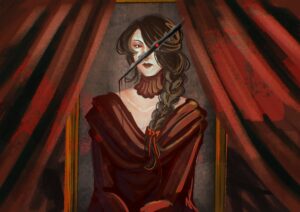
Buried in a legion of lace-trimmed pillows, Cordelia rested on the massive four-poster bed. Her white, high-collared nightgown contrasted the gloom of the fabrics around her. Spilling across the linens, a cascade of black hair remained remarkably glossy, untouched by the illness that ravaged the rest of her body. Yet, beneath that dark halo, she looked utterly fragile. Her skin was so pale it was almost transparent, revealing every detail of her blood system in the form of delicate blue veins.
“Arthur,” she murmured. Her throat sounded dry, hoarse.
“Your tea, my darling.” He stepped up to the bed, fixing a gentle and practiced mask to his lips. It was the very same hollow reassurance smile he gave to every patient, regardless of their state. The typical smile of a devoted physician.
He handed her the cup and saucer. As her long, slender fingers curled around the porcelain, their knuckles brushed. Arthur flinched internally. Cold. Like ice. If he didn’t know better, he would have thought her dead already—and had she truly perished, he would be hosting guests to celebrate. Yet, even in this infernal oven of a room, even when her touch reminded him of childhood winters pressing his palms against frozen windowpanes, she was very much alive. For now. She brought the porcelain to her lips and inhaled the steam. Large and dark as raven feathers, her eyes fixed heavily upon his face before she took a slow sip.
“You spoil me,” she exhaled softly. “Most men would weary of such endless caretaking. You tarry here in the dark when you could be at the clubs in the city.” Tarry. She occasionally slipped into those antique cadences. Arthur simply considered it a harmless, eccentric quirk. And proof that she came from wealth.
“Where else would I be?” He sat on the edge of the soft mattress, the springs creaking under his weight. “My place is here, next to my soon-to-be wife, monitoring her condition.”
Draining half the cup in a single sip, Cordelia let out a soft sigh. A shy, rosy blush was already blooming across her high cheekbones—the arsenic at work. As the poison entered her bloodstream and irritated the capillaries to mimic the flush of health, Arthur felt a thrill of pride. His dosage was flawless. Just another month. Two, if her organs resist.
“The tea has a lovely bite tonight,” she said. Leaning back against the pillows, she closed her eyes in a portrait of pure equanimity. “It helps my weary bones, my dear. I feel as though you are pouring your very life into my veins.” Arthur patted her knee through the thick wool blankets.
“Rest now, my love. Let the medicine do its work.”
Standing up to leave, Arthur was suddenly hit by another wave of dizziness that turned the edges of his vision gray. He clung to the bedpost, waiting for the room to stop spinning. An iron tonic. He would definitely need to prescribe himself a strong iron tonic in the morning.
***
A fortnight had passed. Fourteen. Fourteen long days dissolved into the endless repetition of measured drops and unbearable exhaustion. Outside, the relentless October rains gave way to sleet, pelting the manor’s leaded windows as did the gravel carried by the wind. Within the walls of Cordelia’s estate, the routine hadn’t changed. The only thing truly progressing was Arthur’s own terrifying decline.
In the vast dining room, the crystal chandelier cast a jaundiced light over the heavy, mahogany table. Arthur gripped the carving knife, his knuckles jutting white against his now-translucent skin. His rolled-up sleeves revealed forearms that had lost all their sturdy muscle, leaving him looking impossibly frail. Between him and his fiancée sat a massive, rare roast of beef sat on the silver platter. Bearing down, he attempted to press the blade into the meat, only for his weakened wrist to buckle beneath the strain. The silver handle slipped from his damp palm, clattering against the fine bone china. He gripped the edge of the table as a high, shrieking sound pierced his ears. Darkness encroached on his periphery, but he found himself staring transfixed at the bloody juices of the roast. Feral hunger seized him. His mouth watered at the imagined metallic taste of the marrow. He was a civilized man of science, yet he felt a maddening urge to sink his teeth directly into the raw muscle. The terrifying realization of his own monstrous appetite sickened him. He swallowed hard, forcing the revulsion down.
Across the expanse of polished wood, Cordelia chewed in silence. She looked nothing like the dying woman from a fortnight ago. By every rule of medicine, she should have been bedridden as her organs slowly failed from the cumulative arsenic. Instead, her only symptom was the vivid carmine flush painted across her cheekbones. Sitting perfectly upright in her corseted gown, her dark hair pinned in a twist that accentuated the sharp angle of her jawline, she looked entirely revitalized. Her pitch-black eyes shone with a strange intensity as she sliced into the meat.
“You neglect your repast, my love,” she observed. Her voice, despite its lingering dry rasp, sounded horrifyingly robust. “It will turn cold.”
Arthur pressed a linen napkin to his sweating forehead, though the cloth did nothing to soothe his feverish skin or dry the messy brown strands plastered to his brow.
“Just a minor fatigue, my dear. I must check my blood,” he lied, fleeing the dining room. Seeking peace in the study he had dedicated entirely to his work, he locked the heavy door behind him. Safety. Logic. Reason: Three words he furiously repeated in his head. He ignited the gas lamp above the desk and pulled the brass microscope from its case, his hands shaking so violently he dropped the steel lancet thrice before managing to pierce his index finger. The bead of blood that welled up was horrifyingly wrong. The color itself was wrong. Instead of a rich, healthy crimson, it was pathetic. Watery and pink. Smearing it across the glass slide, he slipped it beneath the lens and adjusted the knob. It looked like a wasteland. Instead of a dense cluster of red cells, only ghostly fragments floated in empty plasma. He had to be hemorrhaging profoundly, yet his skin bore no bruises. No signs of internal bleeding. Pints of blood had suddenly vanished.
Suddenly, the heave scent of bergamot and coal smoke flooded his nostrils. Arthur spun in his leather chair. Cordelia stood in the open doorway. His eyes locked onto the brass handle. He swore he had turned it. Or had he?
Beyond the open doorway, the warped floorboards of the corridor stretched into the gloom. Those planks groaned in agony beneath the slightest pressure; even a stray cat could have made them squeak. Yet, she had made no sound. Not a single creak.
“Darling,” he gasped, frantically tossing a cloth over the microscope. “You should be resting.”
She glided into the room. Her movements lacked the stutter or an uneven tempo of an invalid; she seemed to float over the Turkish rug, stopping mere inches from his chair. As her skirt brushed his bare skin, a terrible chill seeped directly into his aching joints.
“I heard a clatter.” Her black, dilated eyes flicked from his pale face to the covered microscope. “You push yourself too hard, Arthur. You are depleted.” She murmured, reaching out for him.
Arthur froze. He felt completely paralyzed by her gaze, as if Medusa herself were staring him down. Her ice-cold fingers brushed his collar, tracing the angle of his jaw before going down his neck. Long fingernails scraped against his flesh until her thumb found the two swollen puncture wounds over his jugular. Then, she pressed hard. It was the opposite of a gentle caress. She ground her thumb directly into the inflamed tissue. Arthur winced, letting out a sharp hiss. He tried to pull back, jerk away, but her grip was like a vice against his throat.
“A severe chill,” Cordelia whispered, a closed-mouth smile spreading across her pale face. “Perhaps the damp foundation is breeding a miasma. You must root out the rot, my love… before it kills you.” Dropping her hand, she turned and melted into the shadows of the hallway without a single sound. Arthur was left sitting in silence, alone with his horrifying discovery, knowing exactly where he now had to go.
***
Arthur dragged his shoulder along the peeling wallpaper of what was, according to Cordelia, the servants’ corridor. His chest heaved. A wheeze rattled behind his ribs with every breath. He was failing. He told himself it was just the environment: the bedbugs, the suffocating heat, the toxic fumes of coal—it was too much for his vitality. He just needed to root out whatever rotting miasma was festering in the basement. Once it was cleared, the house would be fit to sell after her inevitable passing, and his family’s debts would finally be erased. He just had to keep moving. The kerosene lantern dangled from his left hand. Its glass base swung erratically against his thigh, casting frantic, elongated shadows that danced and stretched across the warped floorboards. He reached the end of the hall. The cellar.
A massive iron padlock hung from the latch. The metal was heavily blistered with decades of orange rust. Arthur wedged the flat edge of a crowbar into the hasp, leaning his entire weight onto the lever. He prayed that his frail wrists would not snap before the iron gave way.
Crack.
The lock fractured. Rusted shrapnel clattered against the wood. As the door opened, a wave of utterly dead air washed over his sweaty face. The scent was suffocating. He thought of it as a mixture of dry parchment and that specific tang that coins leave when licked. He raised the lantern.
With the first couple of steps, the Victorian stairs groaned beneath his weight. Ten steps down, the architecture visibly shifted. The wood gave way to rough Tudor brick encrusted with white, crystalline blooms of saltpeter that crunched under his leather boots. A sharp, physical cold pierced his skin, bypassing the wool waistcoat to settle directly in his aching joints. Twenty-three steps later, the brick turned into uneven, medieval cobblestone. Exhaustion finally betrayed him, causing a misstep. His feet slipped on the stone. Last moment, he caught the balance against the freezing wall, scraping the skin from his knuckles. The damp, narrow stairwell finally turned into an expanse.
Arthur lowered the lantern. The floor beneath his feet was made of massive, seamless slabs of white Roman marble. It was entirely different from the rest of the rotting house—as if someone had been caring for it. It reminded him of the basilica he had seen when visiting Rome. Except this was an English countryside. The modern manor above was merely the latest shell built upon an ancient foundation. His light illuminated what appeared to be a meticulously categorized museum. Rows of glass cabinets lined the marble walls. Dust motes danced lazily in the amber light of his lantern. Arthur dragged his feet forward, peering through the clear glass panes.
Dozens of men’s items rested on velvet cushions; an ornate silver snuff box engraved with a boar’s head, powdered wigs perched on faceless wooden blocks, and silver shoe buckles that begun to tarnish black. He moved to the next shelf. A tray held a dozen gold signet rings, each piece had a different family crest. Pocket watches hung suspended from tiny hooks. Arthur froze. Hanging among them, he recognized his own. The one he had lost months ago.
In the center of the room sat a massive reading desk holding a stack of ledgers. His knees finally buckling, Arthur collapsed into the chair. His trembling fingers reached for the top ledger, pulling it into the light. The paper felt brittle to the touch, and the ink had faded to sepia. The date read December 8th, 1842. His eyes glanced at the sweeping cursive:
“Cordelia grows paler by the fortnight. My addition of antimony to her evening broth yield excellent results. She suspects nothing of my design. Yet, a strange lethargy plagues my own limbs. I must prescribe myself a tonic of iron. Her fortune shall soon clear my railroad debts.”
Arthur’s heart seized. He shoved the ledger aside and grabbed for the next volume. The leather crumbled into red dust beneath his weak grip. September 15th, 1780.
“Lady Cordelia is afflicted by a most stubborn melancholy. I have laced her wine with Foxglove, trusting the apothecary’s promise of a quiet cessation of her heart. I do confess a terrible weakness in my own constitution of late. The physician bled me yesterday, yet I remain stricken with a confounding fatigue. The estate shall be mine ere Winter breaks.”
A pathetic whimper left his throat. Reaching the very bottom of the stack, he took a heavy volume bound in pigskin. The handwriting inside was jagged. It came from a nobleman, written on fibrous vellum. 1655.
“My Wyfe sleepeth, yet she is cold as the grave. I gaveth her the Hemlocke draught againe this morn. She drank deeply, yet her cheeks onely blossom with unholie colour. Lord forgive me, for I dwindle. I waste away in the nyght whilst she doth thrive. She watches me in the dark. She knoweth.”
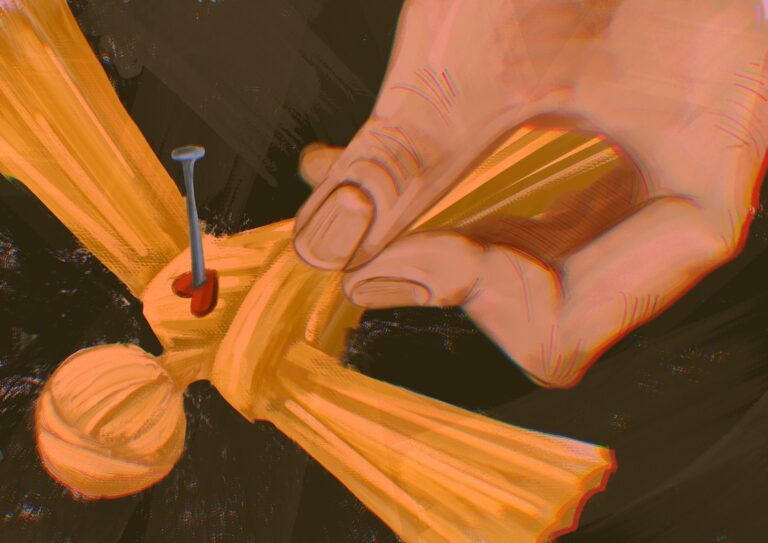
He stared at the writing until his vision blurred, turning the letters into meaningless, flowing shapes. The lantern sputtered as the flame ran low. He pressed a shaking hand to the swollen punctures on his neck. The arsenic, all the careful planning, the arrogant assumption of his omnipotence and medical superiority—it all meant nothing. She had played this game a dozen times before. She had strung men along like puppets across the centuries. He was no beloved fiancé. He was pathetic livestock in her eyes. And now, far too late, he understood.
***
He fled into the dark. The lantern slipped from his sweating fingers, shatterin against the floor, but the crash didn’t even make him pause. He scrambled up the stones in such a blind panic that his leather shoes snagged and tore from his feet. He dragged himself upward after falling to his knees, the cobblestone shredding his trousers along with the skin. His lungs burned. Bile reached his throat as the air thinned. He reached the Victorian stairs, throwing his weight against the basement door until it opened.
The wall of heat slammed into his face again. He had almost forgotten about it all—the coal smoke, the reek of lavender pomanders, and the worst of all, the bergamot. It meant she was nearby. It was the only invisible warning of her presence. Snatching his medical bag on the fly, he sprinted down the Persian runner. His heart struggled to pump the depleted blood. Arthur crashed into the front doors, his shoulder bruising against the oak as he clawed frantically at the brass deadbolts. Locked. He tore down the drapes covering the sidelight windows, only to be met by the reflection of his own, terrified, bloodless face. His eyes were wide, consumed by panic. There was no light beyond the glass. Night had already fallen.
“Thou art dripping sweat on the parquet, Arthur.” The raspy voice came from the stairs. He spun around, pressing his spine against the door.
Cordelia stood at the top of the grand staircase. The coughing, bedridden invalid was gone. Her posture was rigidly erect, as though her spine had physically elongated as she shed her fragile disguise. Raven-black hair cascaded over her shoulders as a stark contrast to her unnaturally pale skin. He recognized the gown she was wearing almost instantly; she had worn it the night they met. Even now, she couldn’t resist the grotesque theatricality of the occasion. She began her descent, her bare feet making absolutely no sound against the wood. Halfway down the steps, she paused, calmly raising one hand to pluck a loose thread from her lace cuff.
“I do despise the chasing,” she sighed. Her tone appeared bored. “It is terribly gauche. Lord Harrington, the industrialist from Manchester. Perhaps you saw his signet ring in my collection. He ran, too. He panicked, screamed like a little child. Eighteen-and-four. Set fire to the east wing in a fit of pique. Let me tell you, a dreadful mess. It took the carpenters a decade to restore the wainscoting exactly as it was. He tried to beat me with a table leg as the house burned around us. Although it was quite a frolic, it was dreadfully tedious. And let me tell you, I prefer quiet endings.” She reached the wooden parquet of the foyer. Her now-dilated eyes locked onto his trembling body. “But thou, Arthur. Thou art a man of modern science. I expected dignity.”
The man of science disappeared. Logic evaporated, replaced entirely by a wave of primal, paralyzing terror. He scrambled backward, desperately trying to retreat, but his spine was already pinned against the heavy oak door. Blindly, he reached for the foyer cabinet, his fingers closing around a heavy, antique crucifix. The cold metal and intricate filigree bit into his flesh as he thrust the cross forward like a shield. His knuckles turned as white as the Roman marble in the cellar as he began babbling broken Latin. Cordelia stopped.
She tilted her head, her sharp features expressing profound pity. Unhurried, she reached out and closed her hand over the silver. There was no smoke nor blistering flesh. The holy relic was utterly useless. Leaning close, she inhaled the terrified scent of his bleeding knuckles, and absently licked her lips.
“Oh, Arthur,” she whispered as her breath reached his earlobe. “Dost thou really think that will stop me? I walked this earth long before they ever thought to put a man on a cross.”
She plucked the crucifix from his trembling fingers and let it fall. The heavy clatter echoed through the empty manor. And then, there was only silence.